
 Camera: Alejandrovilbort | Creative Commons BY-SA 4.0
Barranco is the smallest district in Lima and, for many visitors, the one that feels most like a place to linger. Wealthy Limenos built summer houses here in the nineteenth and early twentieth centuries, when it was a seaside village on the cliffs. Later, writers, painters and musicians moved into the faded mansions, and the district picked up the bohemian reputation it still trades on.
Today Barranco mixes everything at once. Crumbling villas sit beside smart galleries, family homes face late-night music venues, and new apartment towers rise along the cliff edge. It is compact enough to see on foot in an afternoon, and most of the best things in it cost nothing at all.
The Bridge of Sighs and the steps to the sea
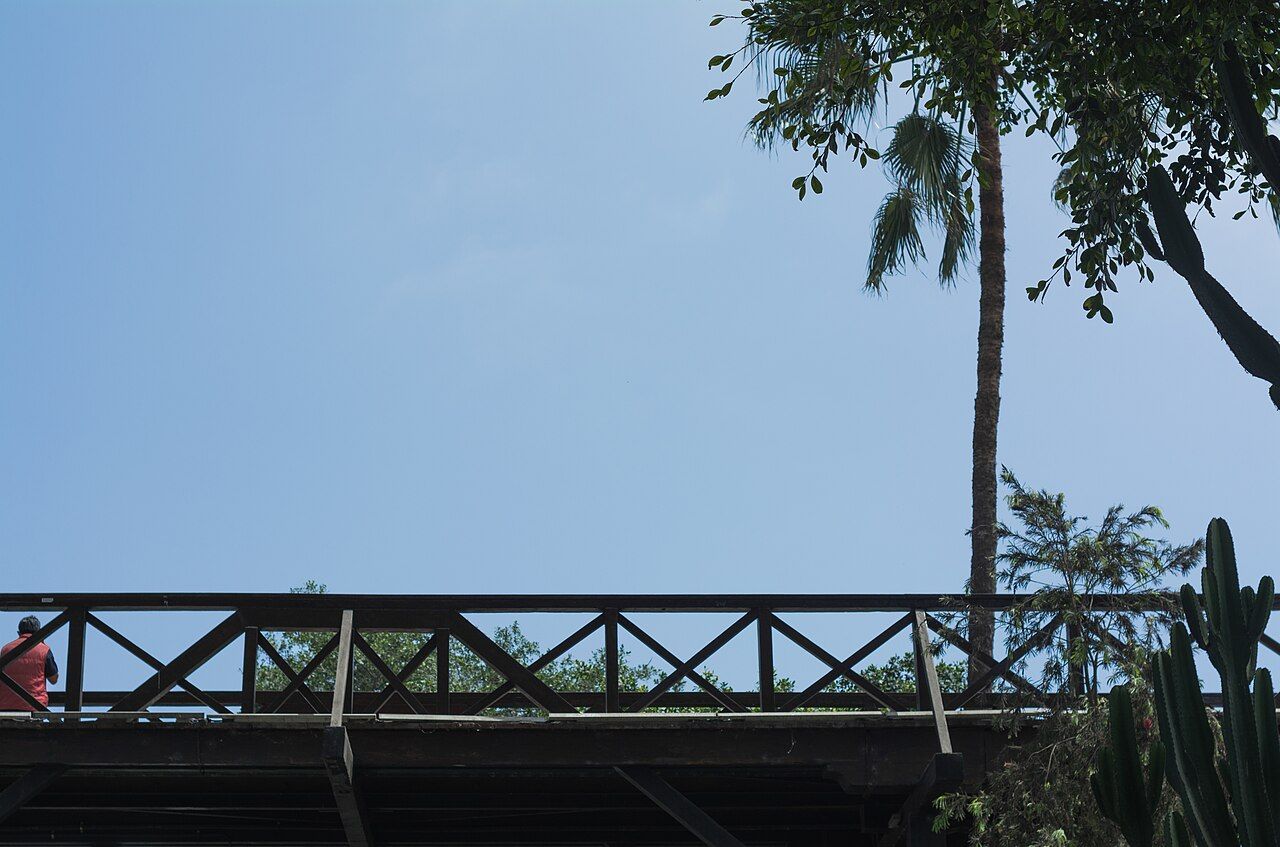
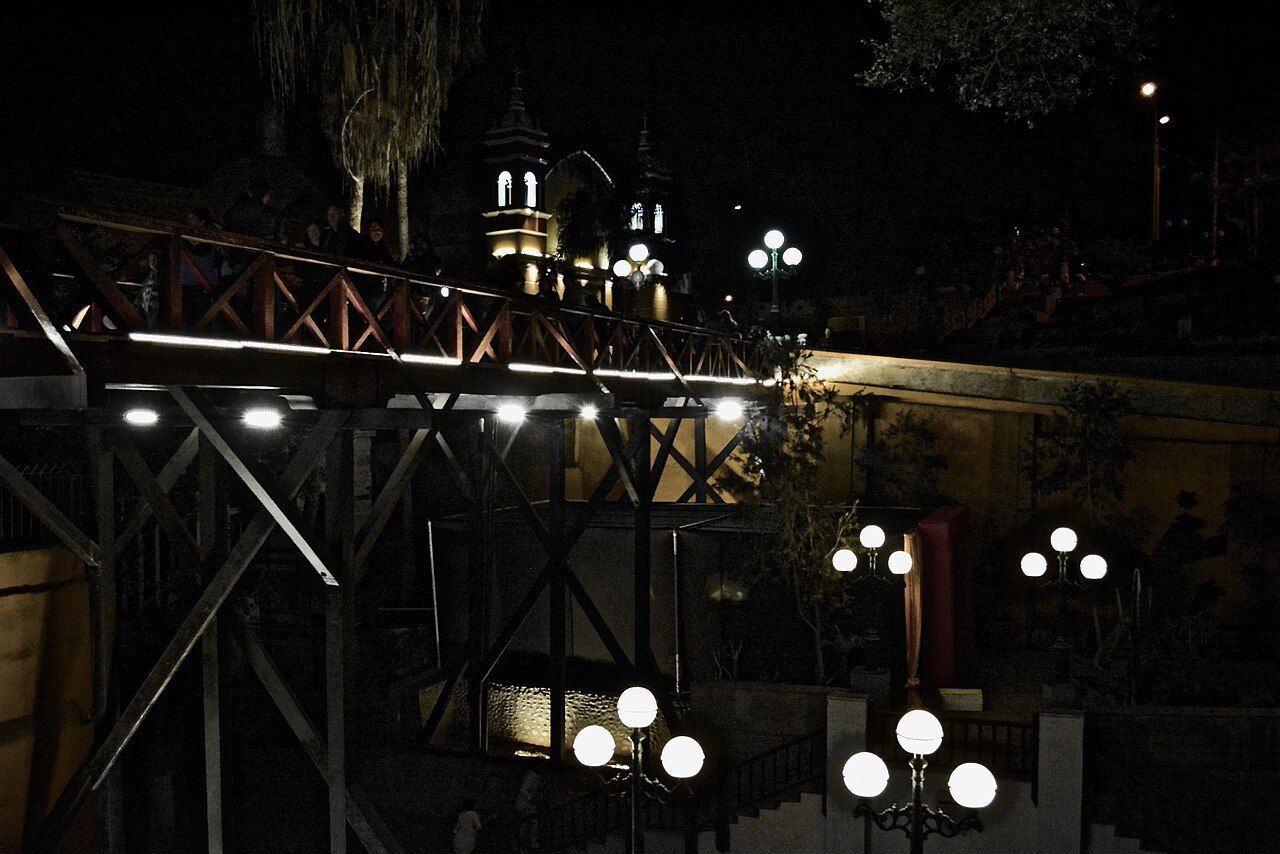
The heart of Barranco is a little ravine that runs from the main square down to the Pacific. Through it runs the Bajada de Banos, a stone-paved stairway once used by bathers heading for the beach, now lined with trees, flowers and old houses. Across the top of the ravine stretches the Puente de los Suspiros, the Bridge of Sighs, a modest wooden footbridge painted dark and framed by palm trees.
 Camera: Alejandrovilbort | Creative Commons BY-SA 4.0

The bridge carries a legend: hold your breath as you cross it for the first time and your wish comes true. Couples cross hand in hand, children race across turning purple, and everyone pauses in the middle for photos. It is small, and you may wonder what the fuss is about, but the setting at dusk, with lamps glowing on the stairs and church towers behind, explains it.
Just beyond the bridge stands the shell of an old church, damaged by earthquakes and propped up rather than restored. Walk past it and the path continues down the Bajada towards the sea. There is no funicular or lift, just steps and a gentle slope, then a footbridge over the coastal highway onto the beach. Going down takes ten minutes; coming back up takes longer, so save some energy.
Murals and street art
Barranco is one of the best places in Lima to see street art, and you do not need a map to find it. Large murals cover the walls of houses, garden fences, the sides of shops and the backs of buildings along the side streets between the main square and the cliffs. Some are by well-known Peruvian artists, others by visitors from abroad, and many change from year to year as walls are repainted.
Look out for bright portraits of Andean women, giant animals, abstract shapes and pieces that play on Peruvian myths and politics. The walls along the lanes near the Bajada and the streets running parallel to the cliffs are especially rich. Wander slowly, look up and around corners, and keep your camera handy.
Remember that most murals sit on private property, so photograph from the street and do not climb on walls or step into gardens. If someone is painting, a friendly word goes a long way, and many artists are happy to talk about their work.
Old mansions and the main square
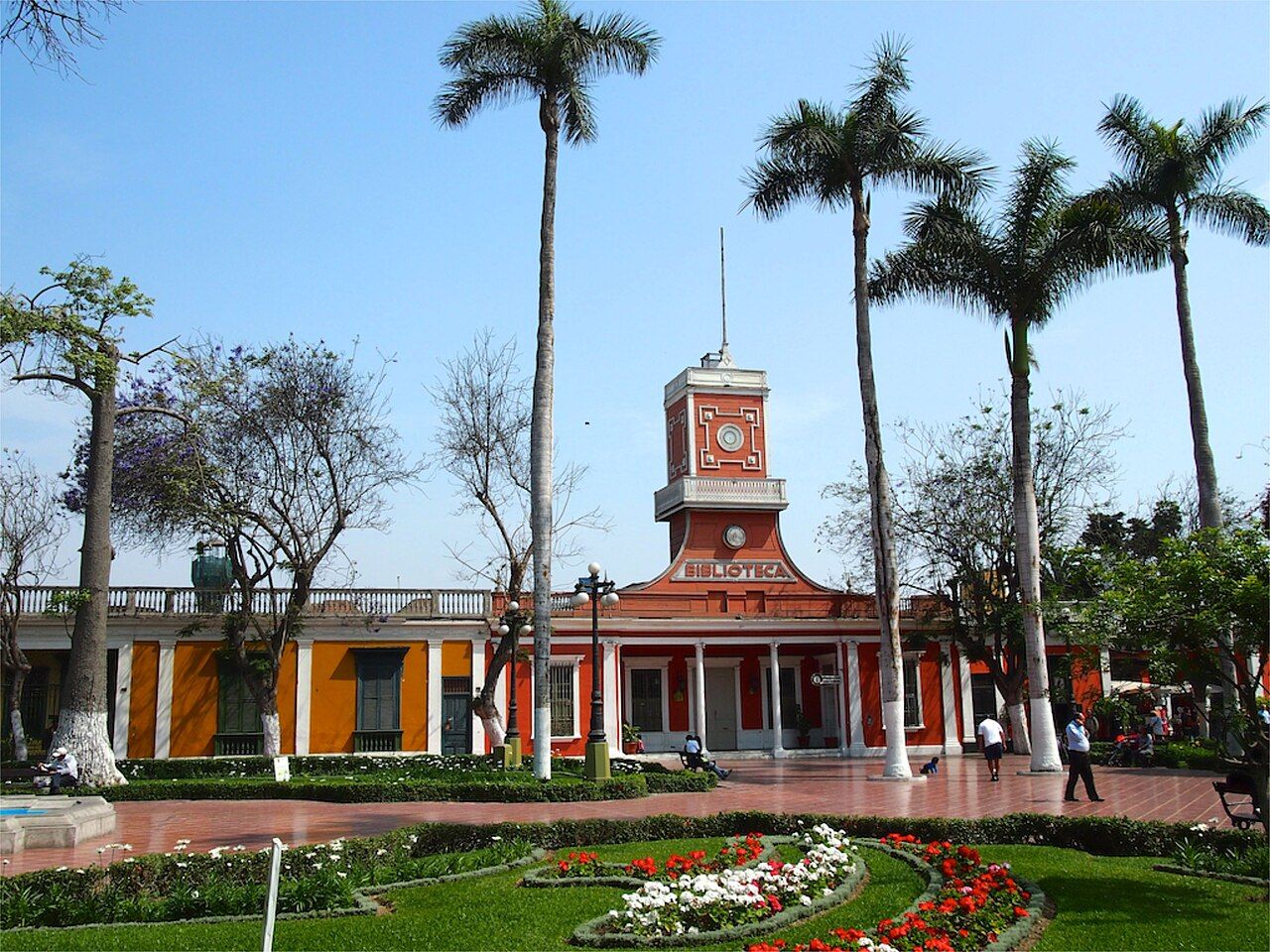
The main square of Barranco, the Parque Municipal, is a neat space of lawns, flower beds and tall royal palms. On one side stands an orange and white colonial-style building with a clock tower and the word Biblioteca, library, across its front. Benches fill up with families in the evening, and the square is a good starting point for any walk.
 Camera: Donairesunovi | Creative Commons BY-SA 3.0

Around it, and along the avenues that lead to the sea, you will find the casonas, the big old houses that give Barranco its look. Many have wooden balconies, high ceilings, tall shuttered windows and pastel facades with stucco decoration. Some have been beautifully restored as museums, galleries or offices; others are slowly collapsing behind their gates, which has its own melancholy appeal.
Next: Miraflores from the cliff edge
A couple of these mansions house art museums, including a collection of colonial painting and silverwork, and a museum of contemporary art sits near the cliffs. They charge entry and keep their own hours. The architecture outside is free to admire, and an hour of slow walking along the quieter streets gives you a good sense of what the district looked like when it was a summer escape.
Barranco by the sea
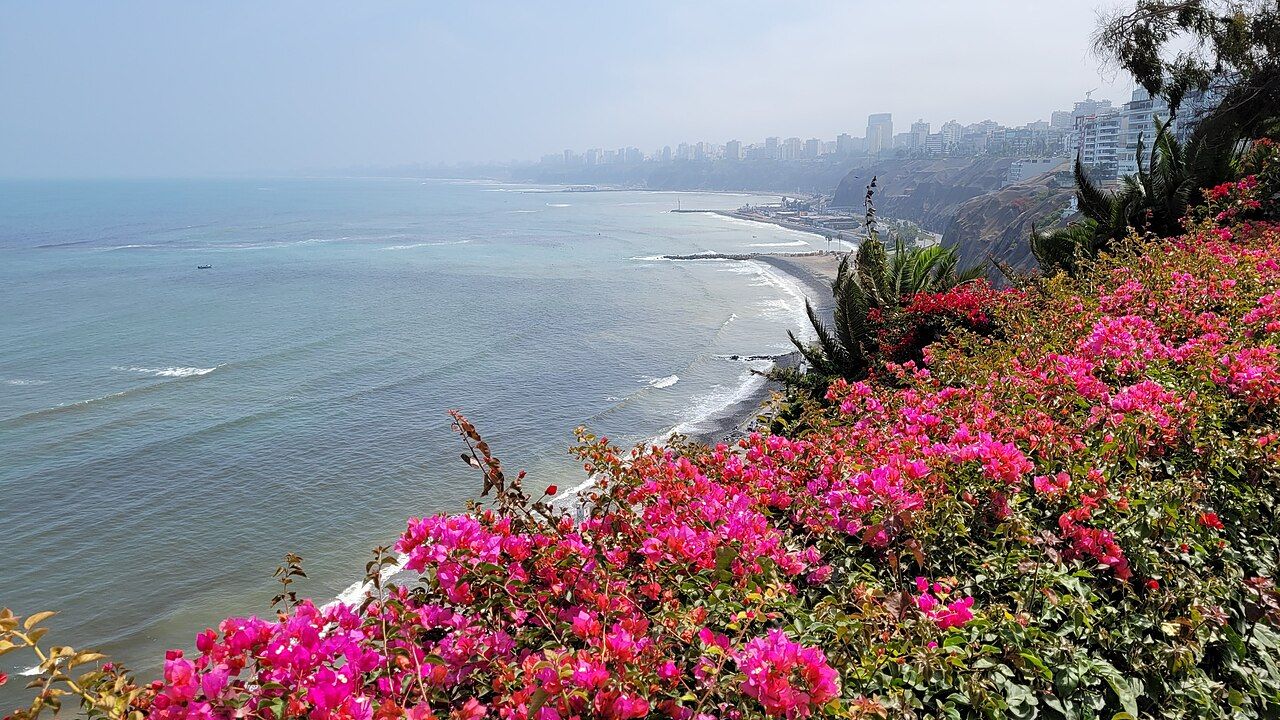
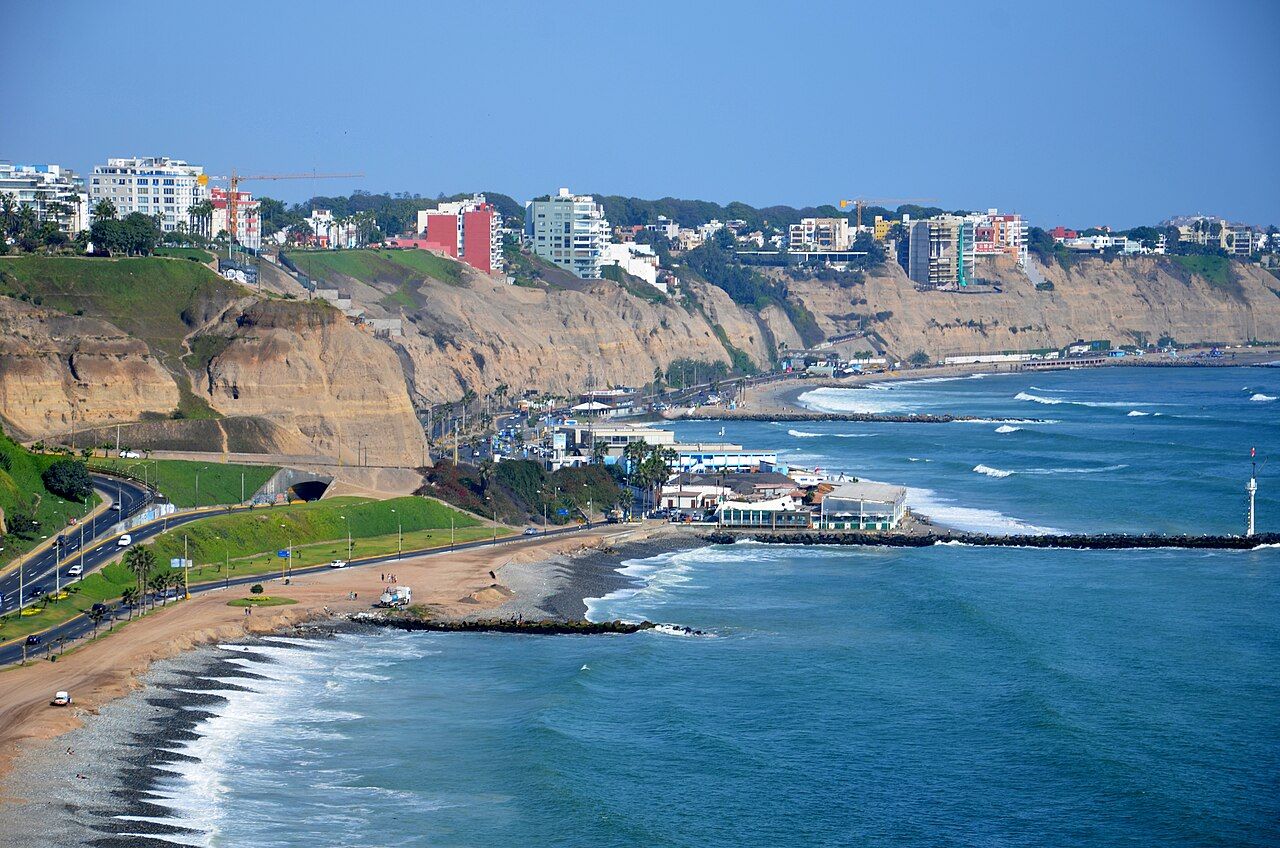
Barranco's cliffs are a little lower and greener than those in Miraflores, and the view along the coast is one of the best in the city. From the small clifftop parks you can see the whole sweep of the bay, from the Morro Solar in the south to the towers of Miraflores in the north, with the coastal highway and its surf breaks below.
 Camera: BBCLCD | Creative Commons BY-SA 4.0

The beaches below are pebbly and the water is cold for much of the year. In summer, from about December to April, local families pack them on weekends, and surfers use the breaks all year round. Swim only where others do and keep an eye on the flags. For a longer stretch of sand and a fishing harbour, carry on south along the coast to Chorrillos and its wharf.
 Camera: Avodrocc | Creative Commons BY 2.0

Barranco also connects easily with Miraflores. Walk north along the clifftop path and you reach the Miraflores Malecon in well under an hour, or take the Metropolitano bus, which has stations along the main avenue.
Evenings in Barranco
Barranco changes character after dark. As the sun goes down, the streets around the main square and the Bajada fill with people heading out to eat, drink and listen to music. Live music is a big part of the scene, from rock and jazz to criollo music, the coastal Peruvian style of waltzes and guitar-led songs with Afro-Peruvian rhythms.
The architecture outside is free to admire, and an hour of slow walking along the quieter streets gives you a good sense of what the district looked like when it was a summer escape.
You do not need to spend much to enjoy it. Grab an anticucho, grilled beef heart on a skewer, from a street stall, sit on a bench in the square and watch the crowds. If you go out for a drink, try a pisco sour, and read up on pisco and other local drinks before you order a second; they are stronger than they taste. Pace yourself, drink water between rounds and get a registered taxi or an app car home rather than flagging one down late at night.
Weekends are busiest, and Friday and Saturday nights run late. Weekday evenings are calmer and a good choice if you want to see the district lit up without the crowds. Either way, Barranco is a place for wandering rather than ticking off sights, and it rewards slow walkers.