
 Camera: Felipe Restrpo Acosta | Creative Commons BY-SA 4.0
Lima sits on a shelf of land that ends abruptly at the sea. In Miraflores that edge is a line of crumbling brown cliffs, and along the top of them the district has laid out a chain of lawns, flower beds, playgrounds and viewpoints known simply as the Malecon. You can walk it for an hour without crossing a busy road, with the Pacific on one side and apartment towers on the other, and it costs nothing at all.
For many visitors this is the first stretch of Lima they see, and it gives a gentler impression than the traffic inland. Locals use it as a running track, a picnic ground, a place to walk the dog and a spot to sit and watch the surf. Join them, and you get a sense of how the city lives with its ocean.
Walking the clifftop parks
The Malecon is not one park but a series of them, joined by a paved path and a cycle lane. Each has its own character: a small amphitheatre here, a lighthouse there, a patch of exercise machines, a bed of roses, a bench angled at the horizon. Benches face the sea, and low railings keep you back from the drop, which is steep and loose. Stay on the path; the cliff face is soft earth and gravel rather than solid rock, and it sheds material after damp nights.
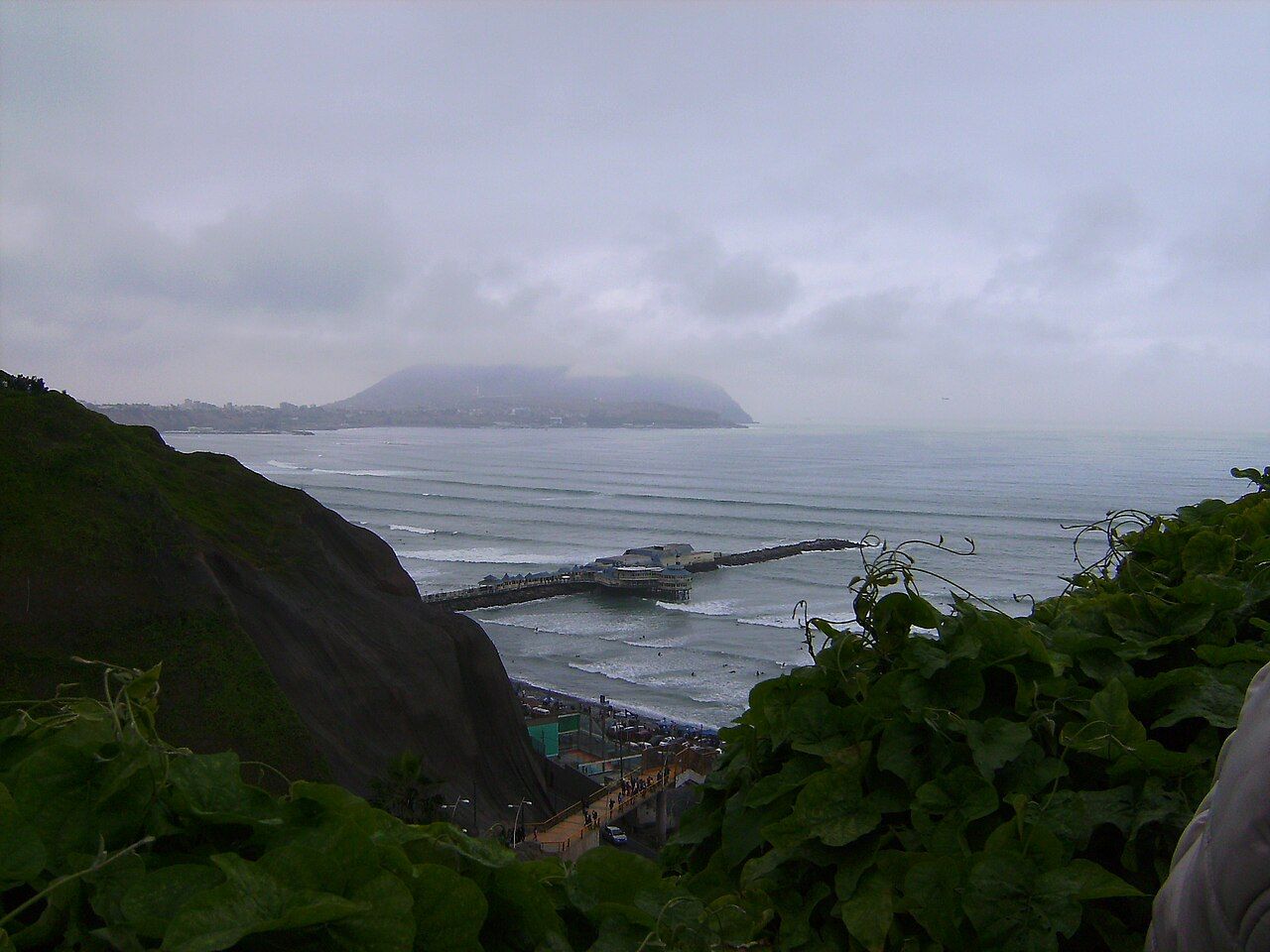
Looking down, you see the Costa Verde highway snaking along the foot of the cliffs, with pebbly beaches, breakwaters and surf schools below it. On a clear day the view runs south to the headland of the Morro Solar above Chorrillos and north towards the port of Callao. On a grey day, which in winter is most days, the sea and the sky melt into one pale band and the scene turns quietly moody.
 Camera: Angela Vanessa Ortiz | Creative Commons BY-SA 4.0

Several sets of stairs and footbridges lead down to the beaches if you want to get closer to the water. They are steep, and the climb back up is a proper workout, so save it for a morning when your legs are fresh. Lifeguards watch some beaches in summer only, and the currents are strong, so swim only where locals swim and only in the warmer months.
Parque del Amor and the mosaic benches
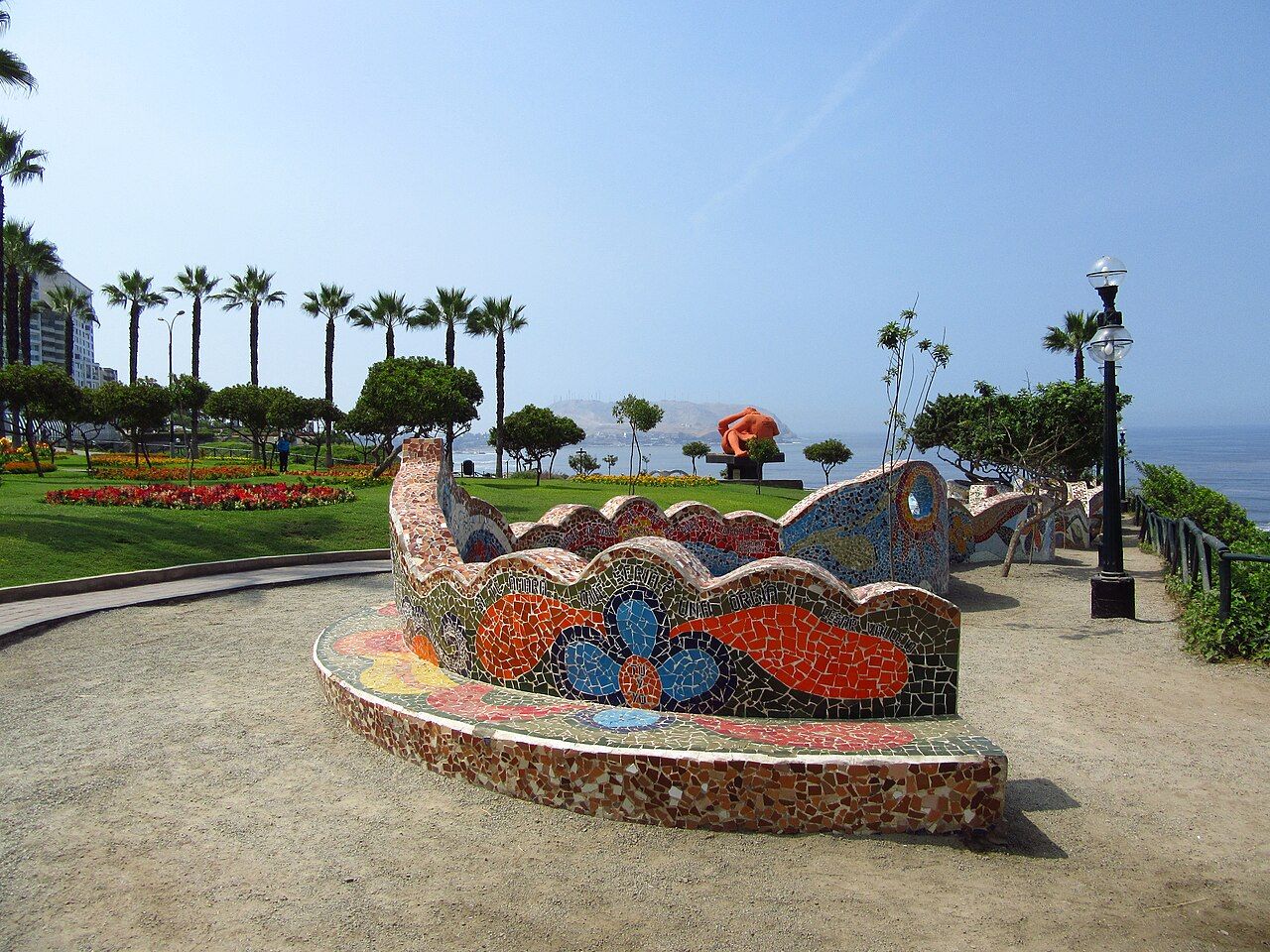
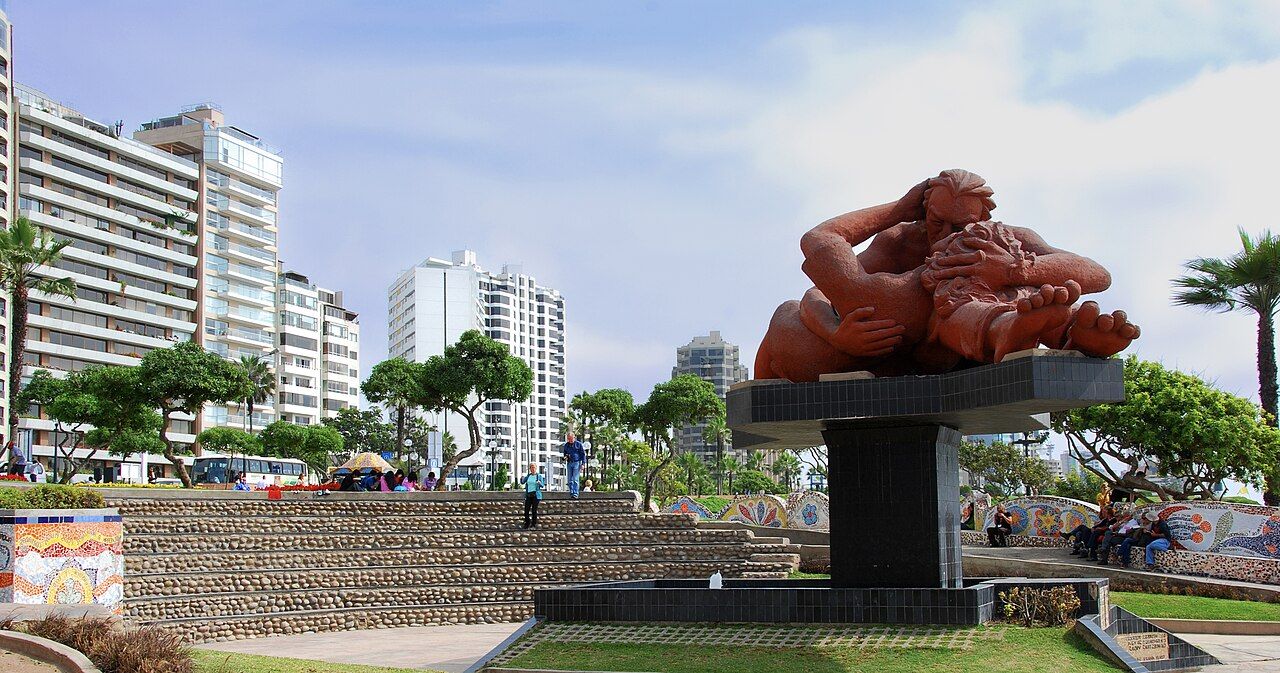
The most photographed spot on the Malecon is Parque del Amor, the Park of Love. Its centrepiece is a large sculpture of a couple locked in an embrace, reclining on a plinth above the sea. It is earthy, a little startling and very Lima. Around it runs a long, wavy bench covered in broken-tile mosaic, with lines of romantic verse and names worked into the pattern.
 Camera: Quado678 | Creative Commons BY 3.0

Couples come here to have photos taken, and on weekends wedding parties sometimes stop by. Even on a weekday you will see teenagers sitting along the mosaic, students sketching and older couples on their afternoon stroll. Bring a snack, find a free stretch of tiles and stay a while; the bench is one of the best free seats in the city.
Not far south, below the park with the round lighthouse, is the spot where paragliders launch. On afternoons with a steady sea breeze, tandem pilots run off the cliff edge and ride the updraft along the coast, drifting past apartment balconies at eye level. Watching them is free. Flying with them costs a fair bit more, and conditions decide whether anyone goes up at all, so if you are tempted, ask about it on the spot.
Old Miraflores and the shopping terrace
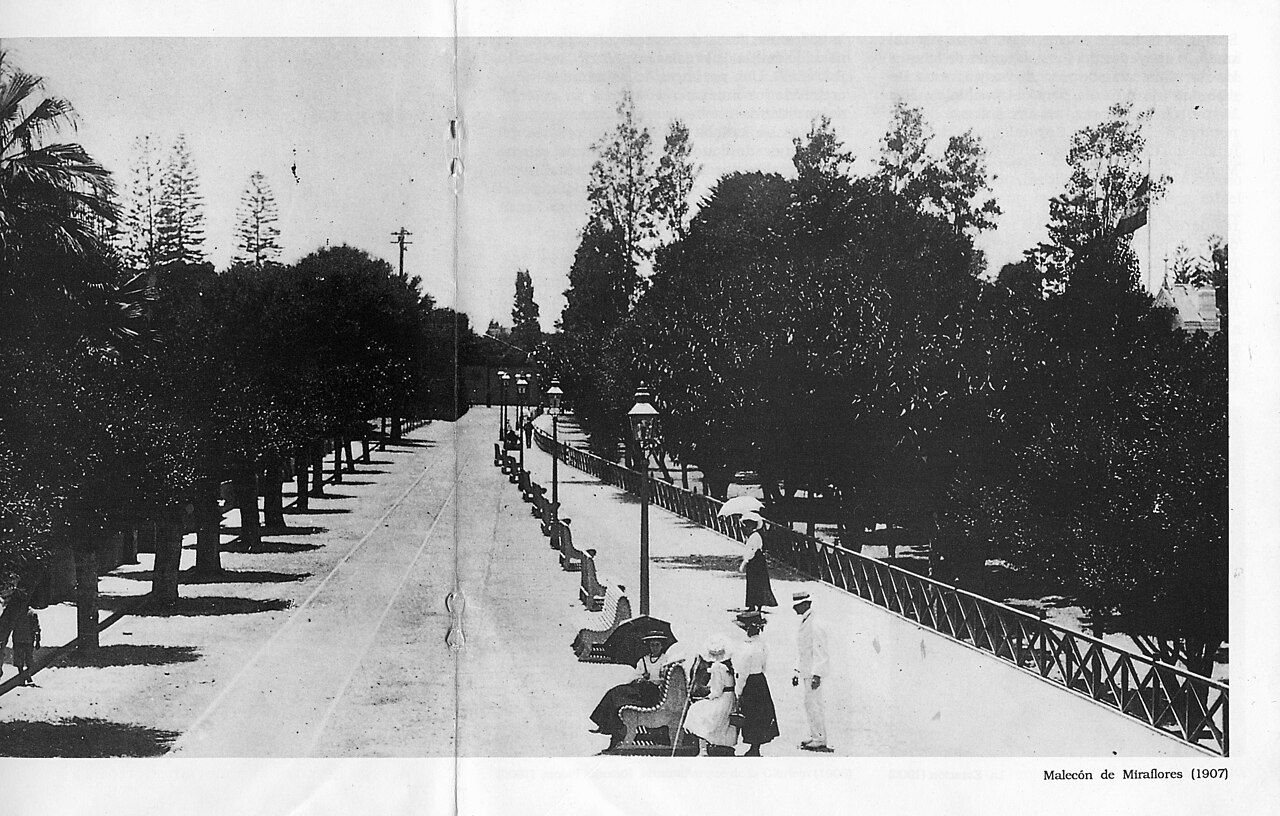
Miraflores was once a seaside retreat outside the city, reached by tram, and the Malecon has been a place for a stroll for more than a century. Old photographs show ladies with parasols, gentlemen in pale suits, gas lamps and young trees along a sandy promenade. The trees have grown, the villas have mostly become towers, and the gas lamps are gone, but the habit of an evening walk along the edge has never faded.
 Camera: Municipalidad de Miraflores from Miraflores, Lima, Perú | Creative Commons BY 2.0

Next: Barranco, where Lima slows down
Just below the clifftop near Parque Salazar, a large open-air shopping and dining centre has been built into the face of the cliff itself. You do not need to spend anything to enjoy it: walk down the stairs to its terraces for a different angle on the coast, use the clean public spaces, then come back up. Prices inside are aimed at visitors and well-off locals, so for an actual meal it is usually better value to head a few blocks inland.
Inland, the centre of the district is Parque Kennedy, a busy square of trees, benches and street vendors next to a large church. It is famous for its resident cats, which sleep in the flower beds and on any lap that stays still long enough. From there, the avenues to the north and east are full of set-lunch places, bakeries and juice bars, which is where your budget goes further.
Huaca Pucllana, a pyramid among the flats
A short walk inland from the Malecon, an enormous stepped platform of mud brick rises between apartment blocks and a busy avenue. This is Huaca Pucllana, a ceremonial centre built by the Lima culture long before the Incas, roughly in the first centuries after Christ. A huaca is a sacred place in Quechua, and the word is used for many of the old adobe mounds scattered across the city.
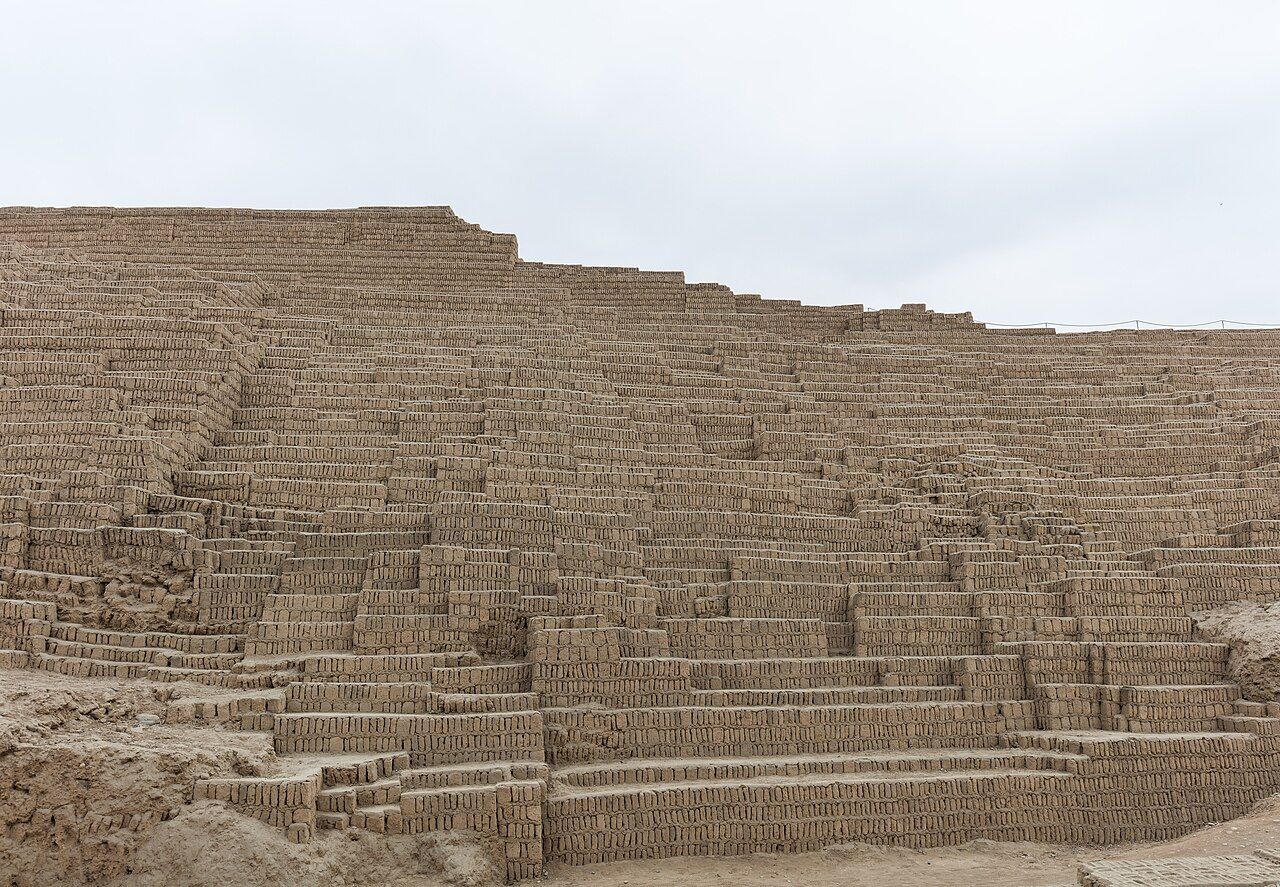 Camera: Diego Delso | Creative Commons BY-SA 4.0

Look closely at the walls and you will see the building technique that makes the site famous. The small handmade bricks are set upright, side by side, with gaps between them, a little like books on a shelf. Archaeologists believe this helped the structure flex during earthquakes, which is one reason so much of it has survived in a city that shakes often.
Visits are by guided tour, usually in Spanish or English, and they take you up ramps and along the terraces to see excavated areas, burials and a small museum of finds. There is also a modest garden of native plants and animals, with guinea pigs and llamas. The site closes on some days of the week and has its own entry fee. Tours at dusk, when the site is lit, are a treat if they are running.
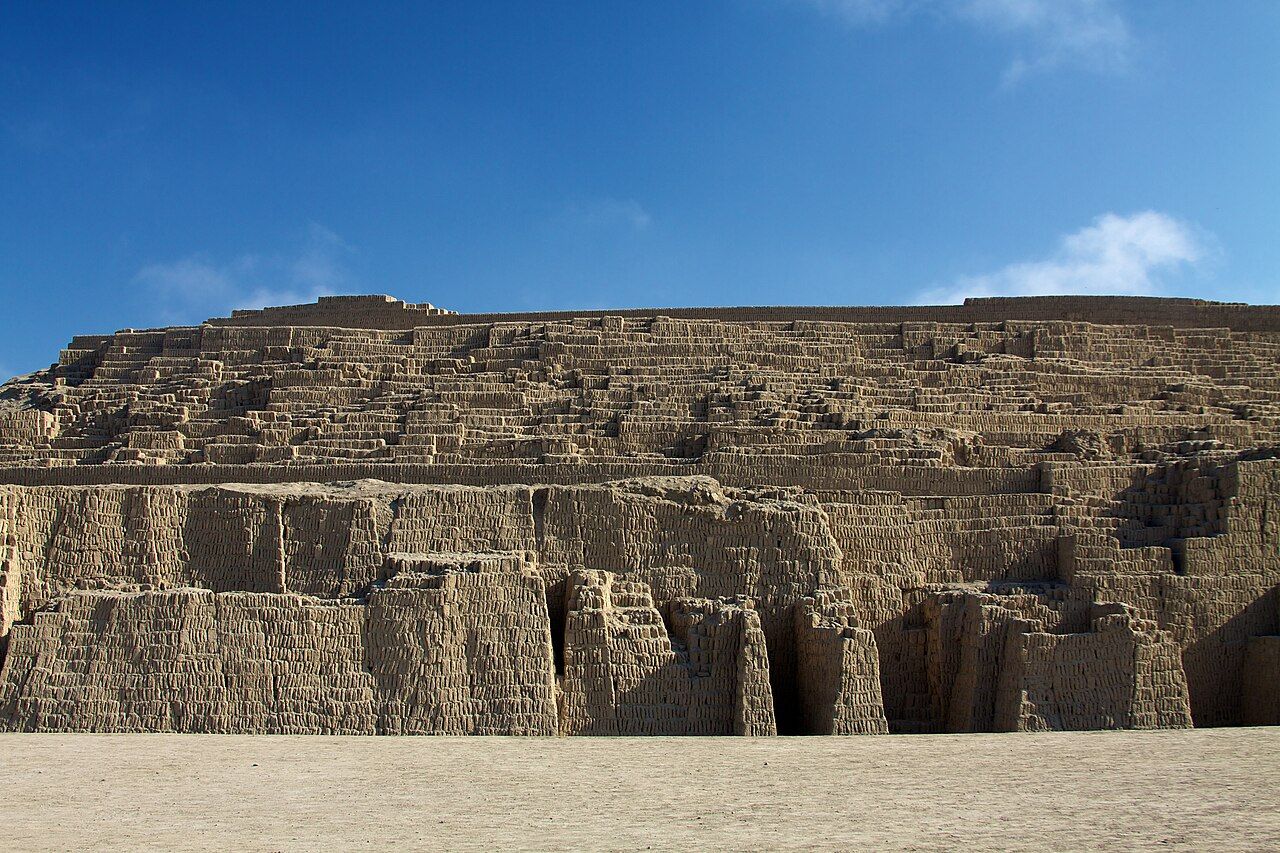 Camera: McKay Savage | Creative Commons BY 2.0

Huaca Pucllana makes a good pairing with the Malecon: an hour among the adobe in the morning, then lunch nearby and an afternoon on the cliffs. If ancient sites grab you, the much larger complex at Pachacamac, south of the city, is the natural next step.
On foot to Barranco
One of the best free walks in Lima starts on the Malecon and ends in the neighbouring district of Barranco. Head south along the clifftop parks, past the lighthouse and the paragliding launch, and keep going as the path continues along the edge. In well under an hour, at a gentle pace, the towers give way to lower buildings, old houses and trees, and you arrive in the bohemian district of Barranco.
Old photographs show ladies with parasols, gentlemen in pale suits, gas lamps and young trees along a sandy promenade.
The walk is pleasant at most times of day, but early evening is the sweet spot. The sky turns gold and pink if the clouds allow, people come out to run and talk, and you reach Barranco just as it wakes up for the night. Go back by taxi or on the Metropolitano, the express bus line, which has stations a few blocks inland in both districts; getting around Lima is easier than the traffic suggests.
- Keep your phone in a front pocket or bag when you stop for photos near the railings.
- Carry a layer, even in summer: the sea breeze turns cool when the sun drops.
- Public toilets are scarce; cafes and the shopping terrace are the usual answer.
- From June to October, expect the grey sky Limenos call the garua.
Whichever way you walk it, the Malecon rewards repeat visits. Come once in the bright summer sun and again on a misty winter morning, and it feels like two different cities sharing the same cliff.