
 Camera: Arlette Rodriguez | Creative Commons BY-SA 4.0
Drive south out of Lima and the city thins into sand, warehouses and chicken farms. Then, just before the Lurín river turns the desert green, a long ridge of brown mounds rises on the right. Those mounds are Pachacamac, one of the great religious centres of ancient Peru, and they are close enough to the capital that you can spend the morning among the ruins and be back in Miraflores for a late lunch.
The site was a sanctuary for well over a thousand years before the Spanish arrived. Several cultures built here, one on top of another, and each left its own layer of adobe. What drew them all was an oracle: a god, Pachacamac, whose name is usually translated as something like "the one who animates the world". People came from far along the coast and up from the mountains to ask questions and leave offerings. When the Inca took the region, they did not tear the old shrine down. They built beside it and above it, and made it part of their own empire.
What you are looking at
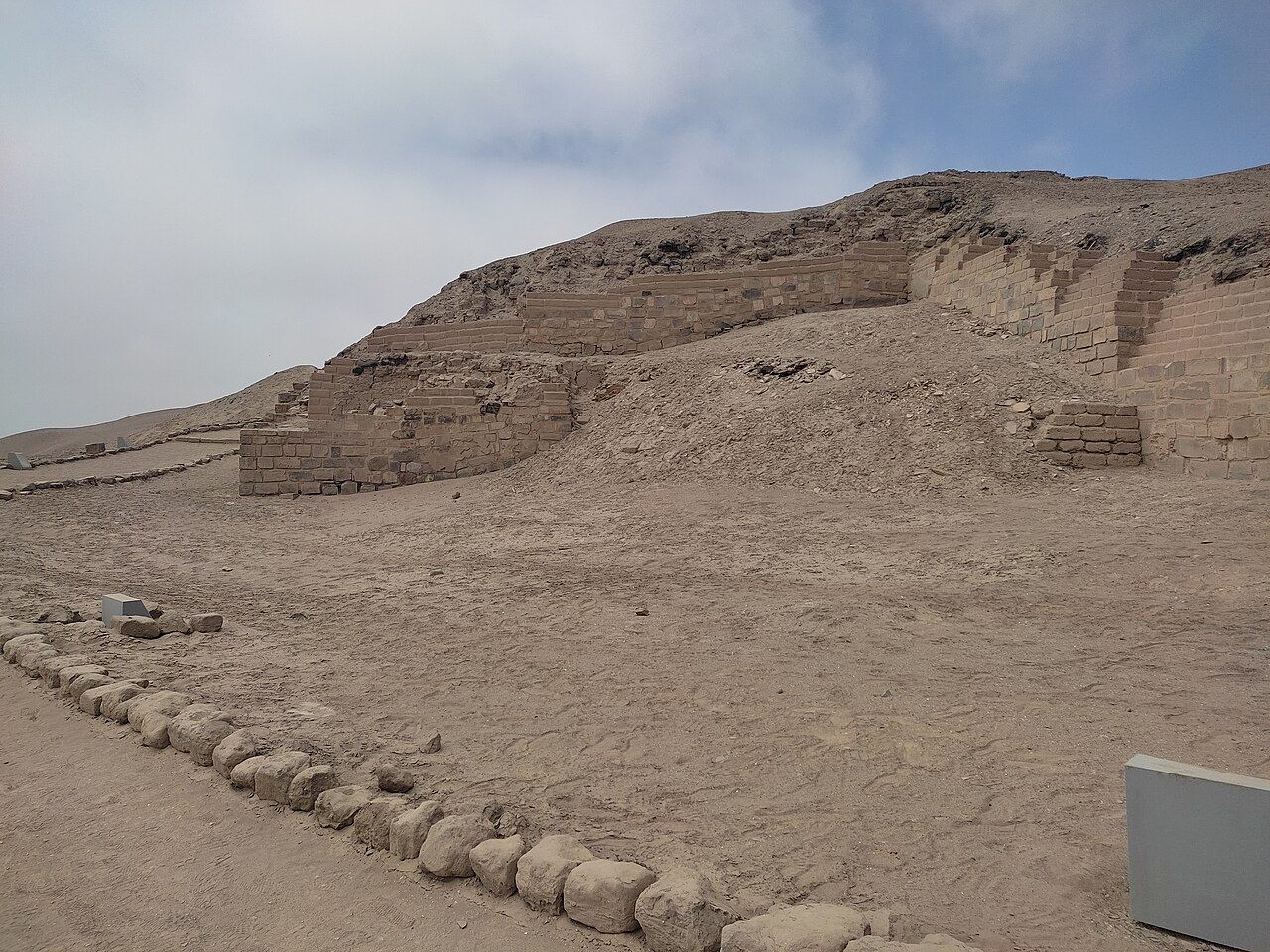
The ruins cover a huge area, and most of it is still unexcavated sand. A road loops through the site, and you follow it on foot or in a vehicle from one cluster of buildings to the next. The structures look like eroded hills at first, because most were made of mud brick, but as you walk closer you start to pick out walls, ramps and terraces.
Many of the larger buildings are known as pyramids with ramps, a local form with a sloping walkway up the front and enclosed courts on top. Archaeologists still debate their exact use, though they seem to have mixed ritual, storage and the business of running a pilgrimage centre. You see them along the first part of the circuit, and they give you a sense of how crowded and busy the sanctuary must have been.
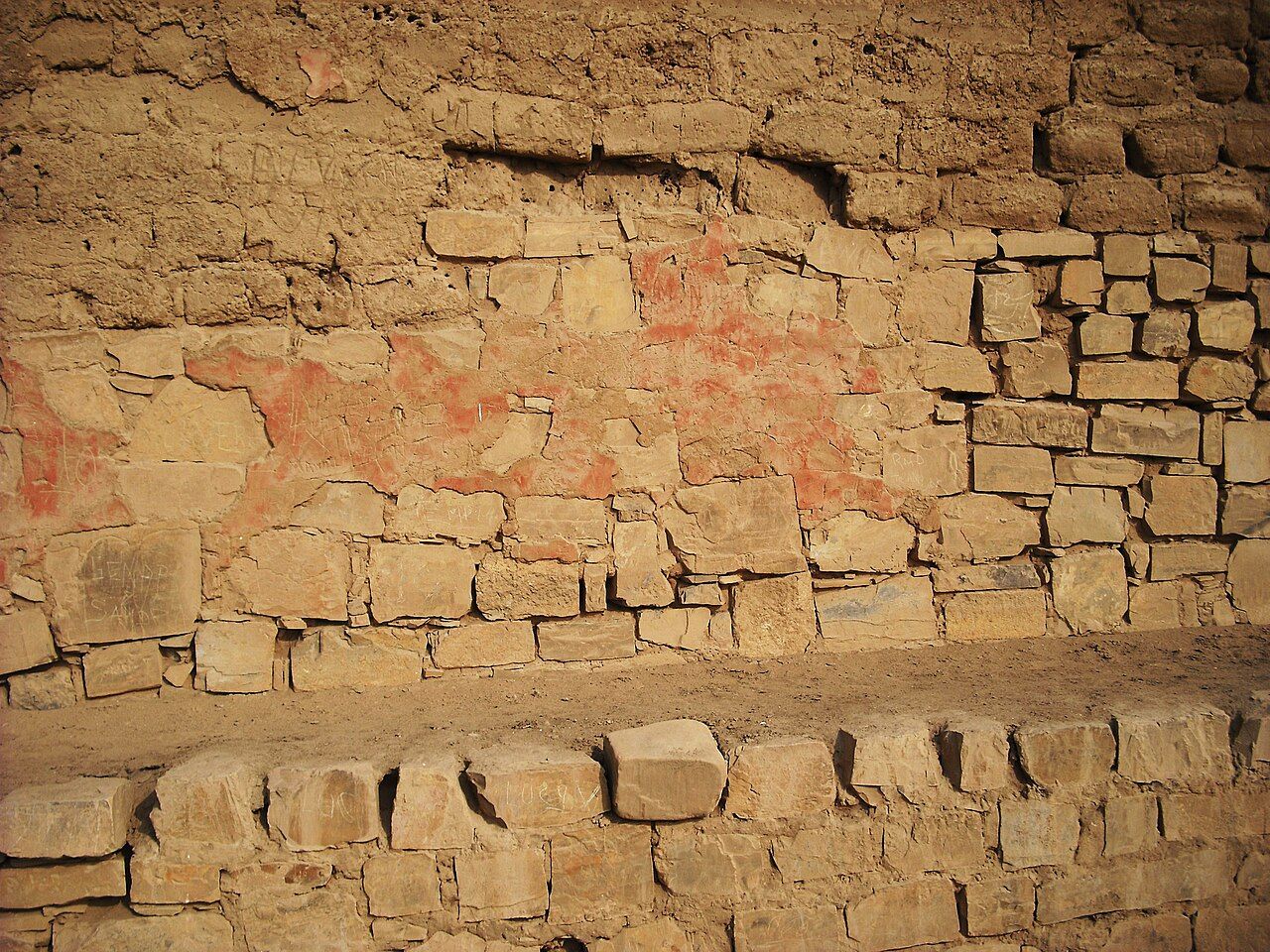
The Painted Temple is the heart of the old cult. This is where the oracle was kept, in a closed room at the top, reached only by priests. Traces of colour survive on its terraces, and a carved wooden idol found here is now protected indoors. Stand at the foot of it and imagine the queue of pilgrims who had fasted for days just to reach the outer courts.
 Camera: Charles Gadbois | Creative Commons BY 3.0

The Temple of the Sun
The Inca built their Temple of the Sun on the highest point of the site, a natural hill overlooking the ocean. It is the largest structure at Pachacamac and the one most visitors remember. The lower walls are of stone set in mud, the upper parts of adobe, and in places you can still see the red plaster that once covered the whole building. From a distance on a bright day, it must have glowed.
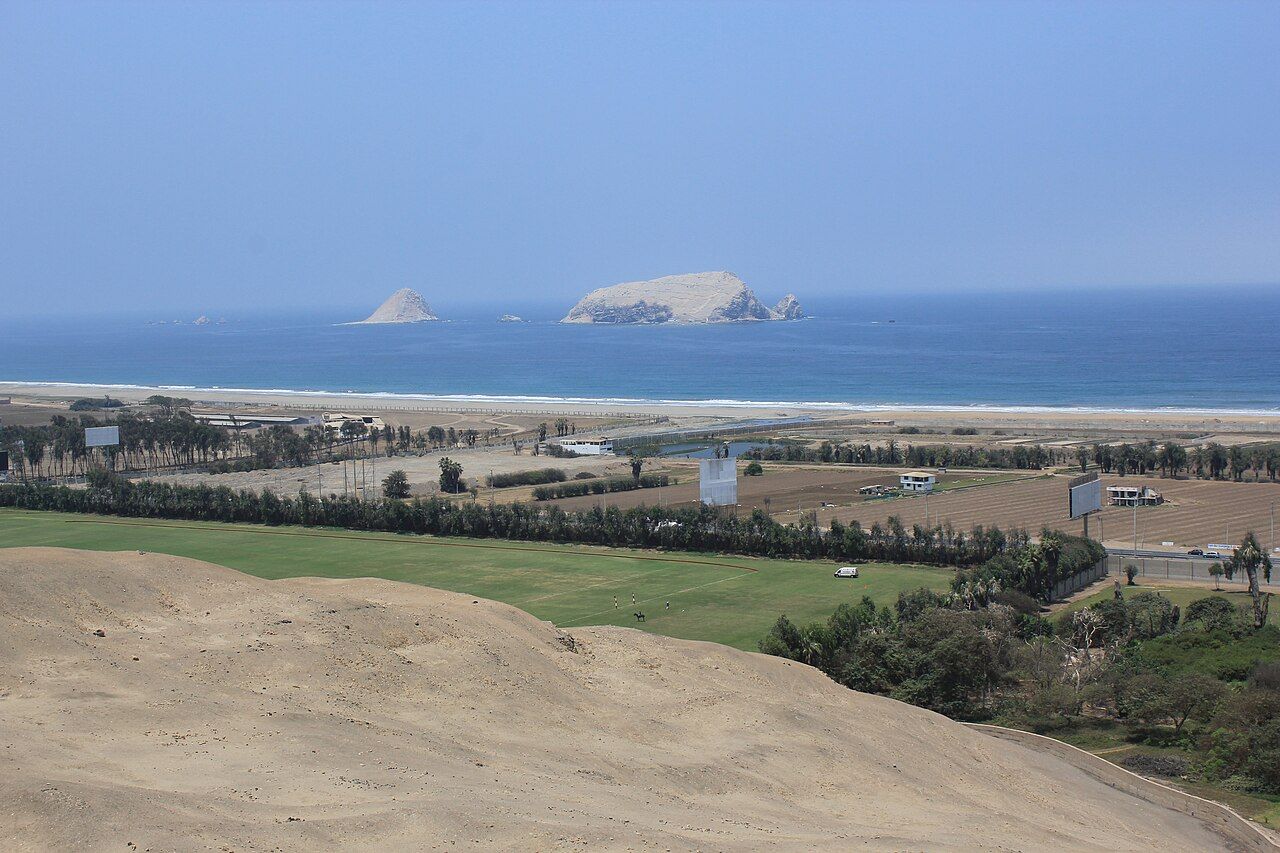
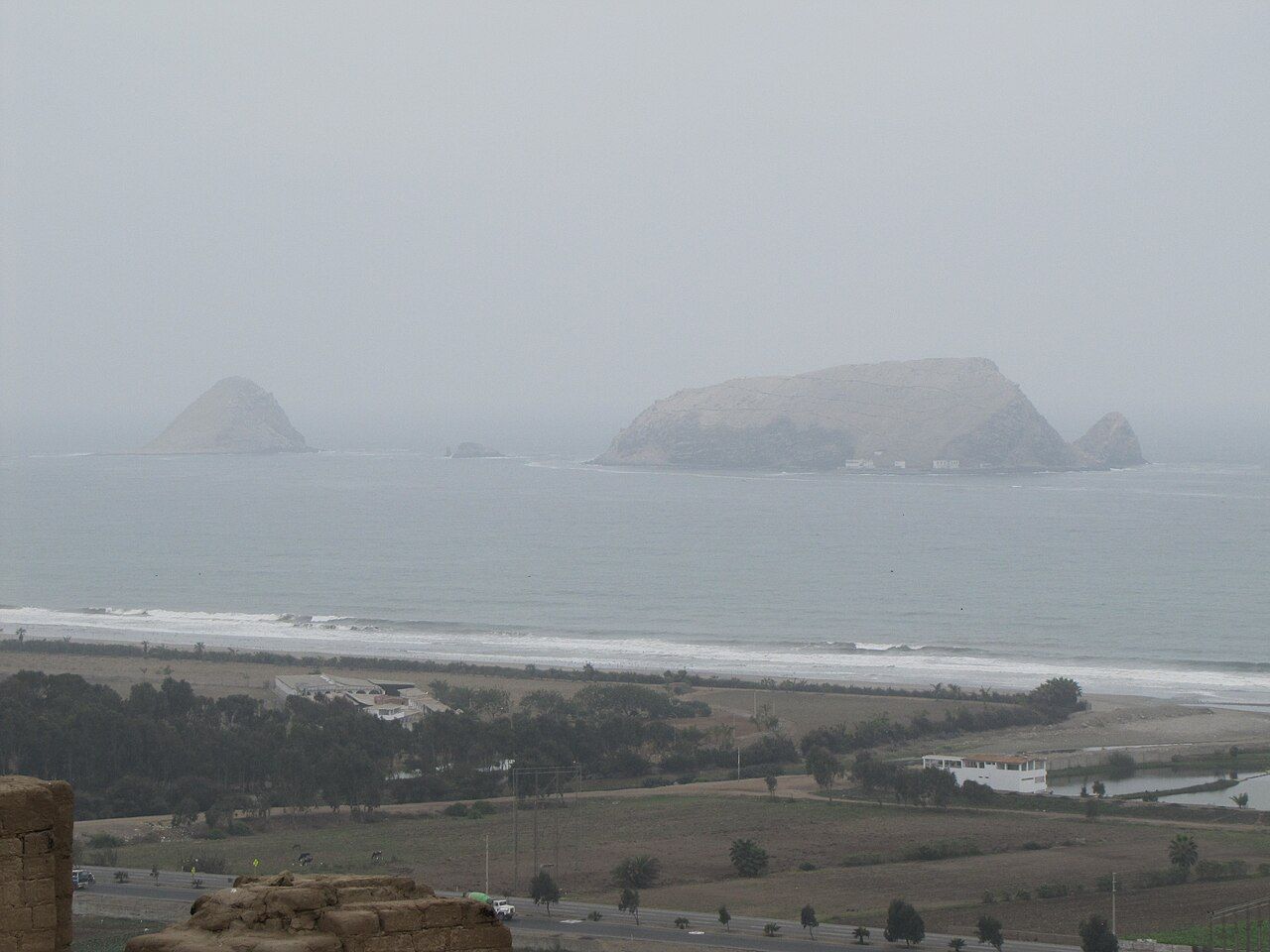
The climb is gentle, along marked paths, and the view from the top is the reason to come. To the west the Pacific rolls in on a long beach, and two rocky islands sit a little way offshore. Inland the Lurín valley runs green between bare hills. You understand quickly why the builders picked this spot: it watches the sea, the river and the coastal road all at once.
 Camera: Laslovarga | Creative Commons BY-SA 4.0

Below the temple, a large complex of rooms and courtyards is usually identified as an acllahuasi, a house for the chosen women who wove fine cloth and prepared offerings for the state religion. Parts of it have been heavily restored, which makes the layout easier to read than elsewhere on the site.
From a distance on a bright day, it must have glowed.
The site museum
Start or finish with the museum near the entrance, a low modern building that blends into the slope. It is small but well arranged, with pottery, textiles and objects from burials, and it sets out the long story of the sanctuary from its early builders to the Inca and the arrival of the Spanish in the 1530s. The wooden idol, carved with intertwined figures, is the centrepiece.
The museum is also the best place to understand how the oracle worked, how pilgrims travelled, and why a coastal shrine had such pull far into the mountains. If you are short of time, spend half an hour here and an hour on the circuit.
Next: Caral, the oldest city in the Americas
Pachacamac pairs well with the other great pre-Columbian collections in the city. After a morning here, an afternoon among the ceramics in the Larco museum in Pueblo Libre fills in many of the cultures you have just walked through. Further north, the far older city of Caral makes a longer day trip if the ruins catch you.
Getting there on a budget
Pachacamac sits on the southern edge of greater Lima, roughly 30 to 40 kilometres from the centre depending on where you start. There are two main ways to get there cheaply.
By bus
Public buses and minibuses run south along the Panamericana Sur and through the districts that lead toward Lurín and Pachacamac. Look for vehicles with Pachacamac or Lurín on the windscreen card and ask the driver or the conductor, the cobrador, to let you off at the ruins, "las ruinas". The ride is long and can be slow in traffic, but it costs very little. If you are not confident on Lima's buses, read how to get around the city first.
By taxi
A taxi from Miraflores or Barranco is quicker and still affordable if you split the cost between two or three people. Agree on the fare before you get in, and if you want the driver to wait while you visit, agree that too. Some travellers combine Pachacamac with a stop at the beaches further south, which works best in summer.
- Leave early to beat both the heat and the morning traffic.
- Carry cash in small notes for the bus and for drinks at the entrance.
- Bring your own snacks; there is little to buy inside the site.
Practical sense for the day
The site is open desert. There is almost no shade on the circuit, and even under the grey winter sky the sun burns. Wear a hat and sunscreen, and take a full bottle of water each. Paths are sandy and uneven in places, so trainers or walking shoes are better than sandals.
 Camera: David Berkowitz from New York, NY, USA | Creative Commons BY 2.0

The weather here follows Lima's pattern. From roughly May to November, the low grey cloud the city calls the garúa can hang over the coast, and the islands may vanish into the haze. In summer the sky usually clears and the colours of the ruins come alive, but the heat in the middle of the day is real.
Respect the ropes and the signs. Adobe is fragile; one careless step on a wall can undo work that took archaeologists months. Stick to marked routes, do not climb on structures, and leave everything where it lies, even a potsherd that looks unimportant.
Give yourself half a day in total, more if you take the bus. It is one of the easiest ways to step outside the modern city and see what the coast meant to the people who lived here long before Lima existed.