
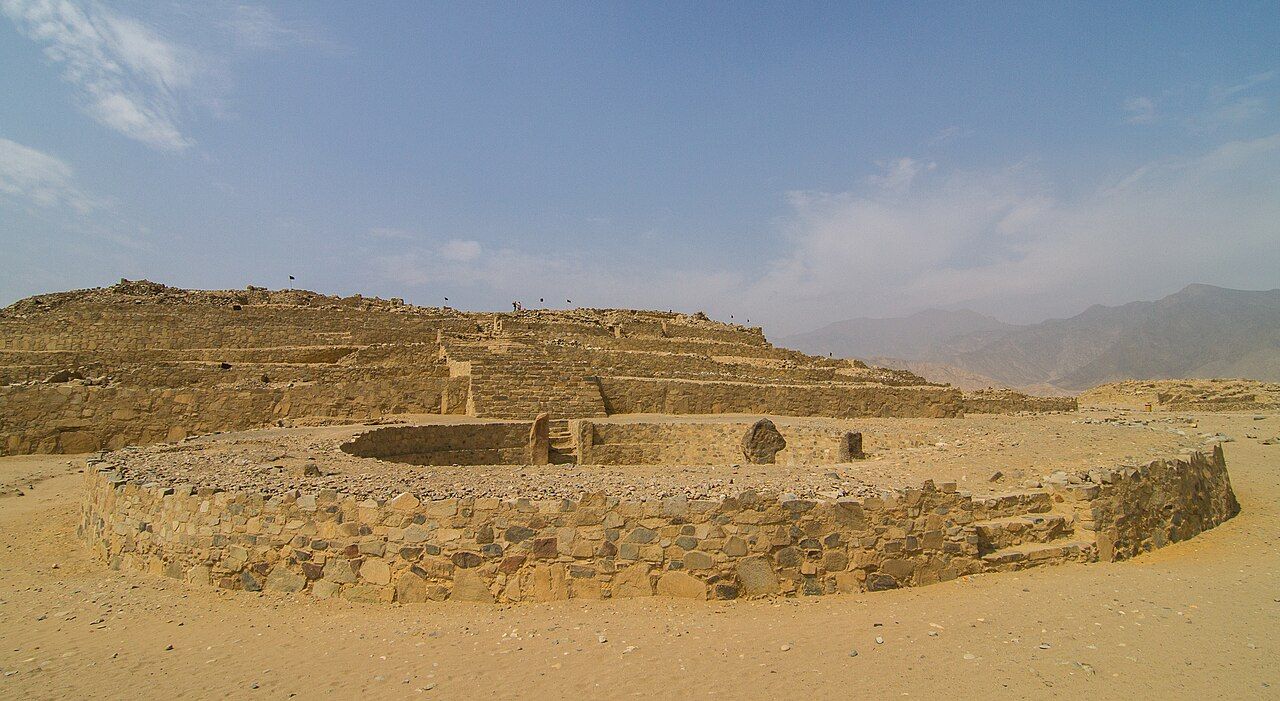
 Camera: Jon Gudorf Photography | Creative Commons BY-SA 2.0
When the pyramids of Giza were being raised, people in a dry valley on the coast of what is now Peru were already building their own. Caral, in the Supe valley north of Lima, is generally dated to around 5,000 years ago, which makes it one of the oldest cities in the Americas and among the earliest anywhere in the world.
It does not look like Machu Picchu. There are no fine Inca walls and no mountain drama. What you find instead is a quiet, wide site of stone platforms, sunken circular plazas and terraced pyramids in a bare brown valley, with the green line of the river below. The scale and age of it are what stay with you.
Why Caral matters
For a long time, the story of civilisation in the Andes started much later. Caral changed that. Excavations from the 1990s onward showed a planned city with public buildings, homes and plazas, built by a society that farmed the valley and traded with fishing villages on the coast. Cotton for nets and squash, beans and other crops came from the valley; anchovies and shellfish came from the sea.
Several things about the site surprise visitors. Archaeologists found no pottery from this early period, and very little evidence of warfare. They did find musical instruments, including flutes made from bird bone, and a knotted cord that may be an early example of the quipu, the record-keeping system later used by the Inca. The site was added to the UNESCO World Heritage list in 2009.
Walking the site
Visits follow a fixed path, usually with a guide, that links the main buildings. The route is mostly level but long, on packed earth and gravel, and you see the structures from viewpoints rather than climbing on them. That protects the stonework and also gives you the best sense of the city's layout.
The Pirámide Mayor
The largest pyramid rises in stepped terraces above a sunken circular plaza. A central staircase climbs the front, and the plaza below would have held people gathering for ceremonies. The way the round plaza and the square pyramid sit together is a pattern repeated around the site.
The amphitheatre and the residences
Another pyramid fronts a larger sunken plaza often called the amphitheatre, where the musical instruments were found. Elsewhere you pass the remains of homes, some grand and close to the pyramids, others simpler on the edges. The difference hints at a society with its own ranks and roles.
Next: Pachacamac, the oracle temple south of Lima
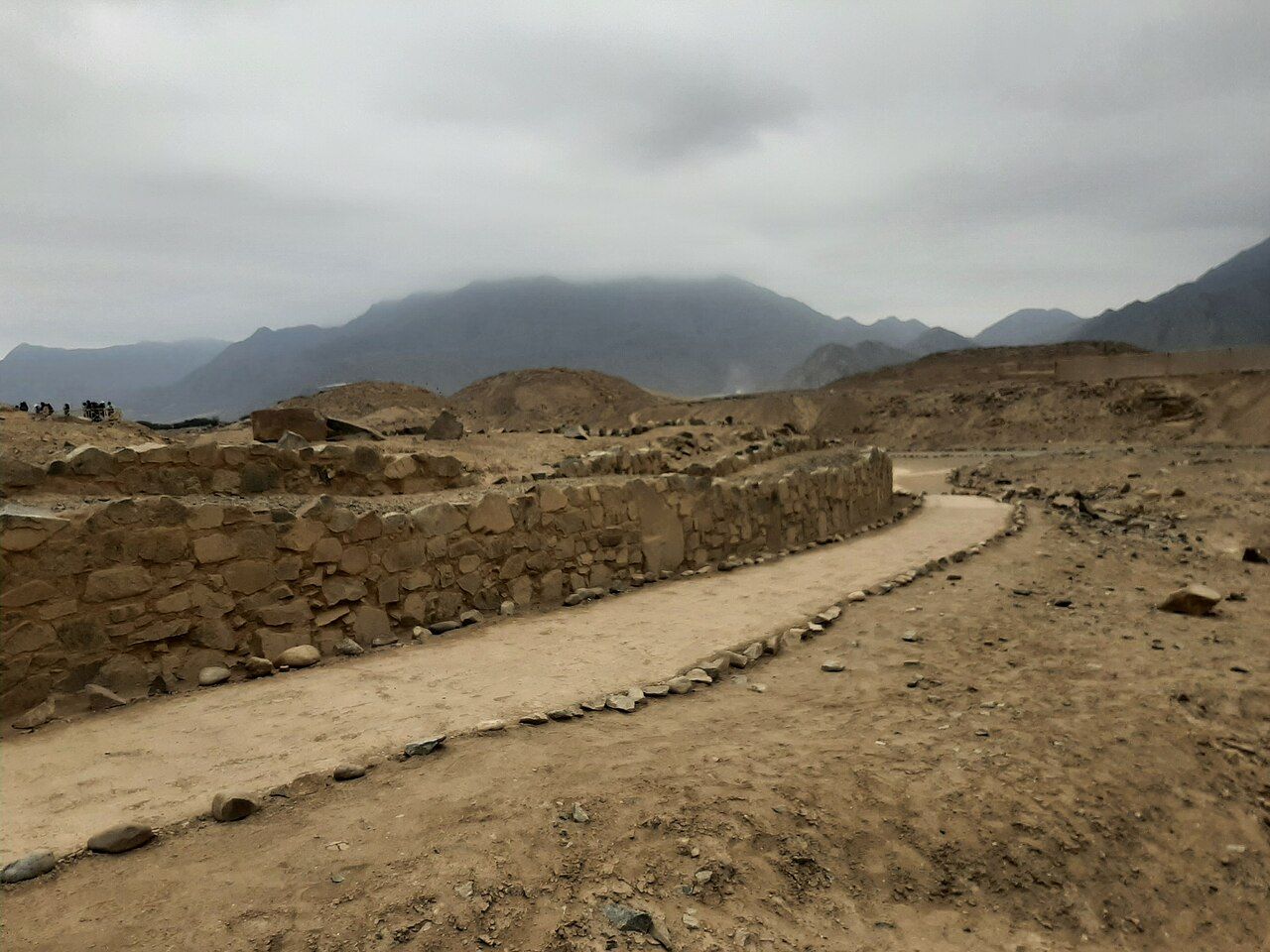 Camera: Ariana zafra | Creative Commons BY-SA 4.0

Work continues at Caral, and parts of the site may be covered by shade canopies or closed while archaeologists dig. The canopies protect fragile surfaces from sun and wind. If you have already seen the later adobe sanctuary at Pachacamac south of the city, it is striking to compare: Caral is built mostly of stone, and is thousands of years older.
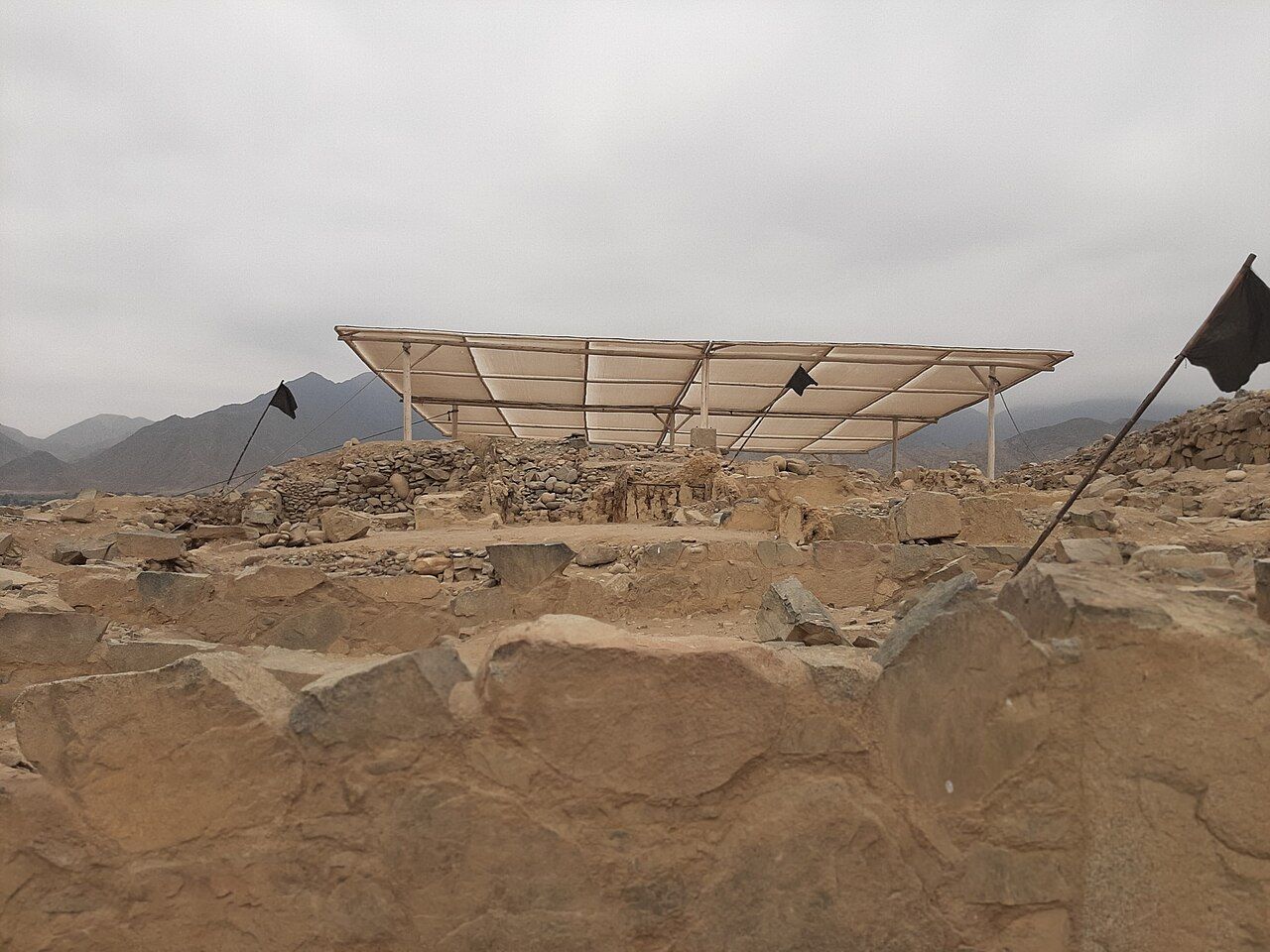 Camera: Ariana zafra | Creative Commons BY-SA 4.0

Getting there
Caral is roughly 180 to 200 kilometres north of Lima. The usual route is by bus up the Panamericana Norte to the town of Supe or nearby Barranca, a few hours depending on traffic leaving the city. From there, local cars and minibuses run up the valley, the last part on a rough road. The final stretch to the site can involve a walk from the road and a river crossing on a footbridge, depending on the route and the season.
Plan on three to four hours each way, sometimes more. That makes Caral a full and tiring day trip, so many people book a day tour from Lima that handles the transport and the guide. Doing it independently is cheaper but takes patience. Read up on the city's buses and taxis first, since leaving Lima is the slowest part of the journey.
- Leave Lima very early.
- Agree a return time with any driver who takes you up the valley.
- Carry enough cash for transport, entry and food; there are few cash machines on the way.
Parts of the site may close for excavation.
Sun, dust and heat
The Supe valley is desert. Even when Lima sits under its winter cloud, the sun can break through here by late morning, and there is very little shade on the path. In summer it gets properly hot. Wear a wide hat and long sleeves, put on sunscreen before you start, and drink regularly rather than waiting until you are thirsty.
Wind lifts fine dust across the site in the afternoon. Keep cameras and phones in a sealed bag between shots, and wear sunglasses. Sturdy shoes beat sandals on the gravel.
The cooler, cloudier months from about April to November are the most comfortable for walking, although the light is flatter. Summer brings blue skies and sharp shadows on the pyramids, with heat to match. Whichever season, start early.
Food and a slower option
Food on the site itself is limited, so bring a picnic or eat in Supe or Barranca. Simple restaurants in the valley towns serve fish, rice and set lunches at modest prices; the coastal towns have the freshest seafood. If you prefer not to squeeze it all into one day, stay a night near Barranca and visit Caral the next morning, when the light is better and the site is quieter.
Caral rewards a bit of reading before you go. Learn a little about the coast's other ancient cultures at the Larco museum first, and the stone platforms in the valley will make far more sense.