
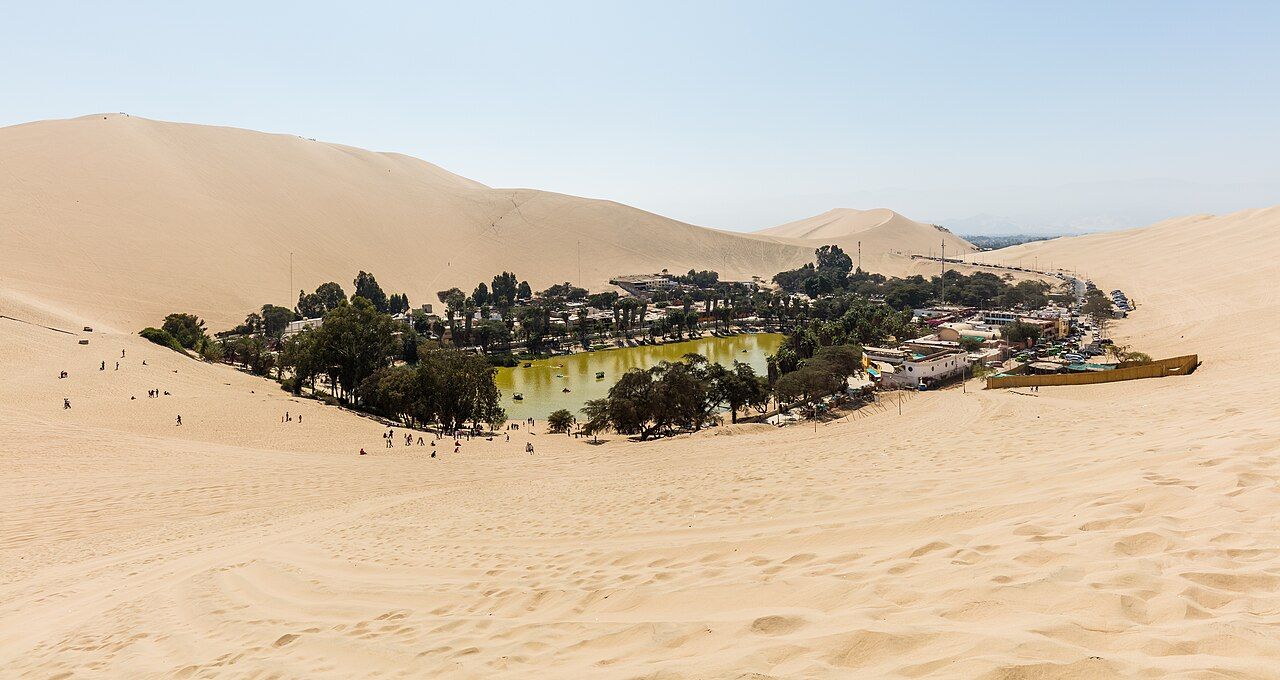
 Camera: Diego Delso | Creative Commons BY-SA 4.0
Picture a pool of green water, a ring of palm trees and a few streets of low buildings, then wrap the whole thing in dunes that rise higher than tower blocks. That is Huacachina, an oasis just outside the city of Ica, several hours south of Lima. It looks almost too neat to be real, and it has become one of the most popular stops on the southern route.
It is small. You can walk around the lagoon in a few minutes, and the village is mostly places to eat, sleep and sign up for trips into the sand. The pull is the dunes themselves, the colours they turn at sunset, and the strange feeling of a lake sitting in the middle of the desert.
Getting there from Lima
Long-distance buses run south along the Panamericana from Lima to Ica, a trip of around four to five hours. Many continue on to Nazca and Arequipa, so Ica sits neatly on the way. From the bus terminals in Ica, Huacachina is only a few kilometres away, a short and cheap taxi ride. Settle the price with the driver before the car moves.
Many people stop first in Paracas for the Ballestas Islands, an hour or two further north, then continue to the oasis. You can visit Huacachina as a long day trip from Lima, but you would spend most of it on the bus. One night lets you see both sunset and the quiet early morning, when the sand is cool and nobody is about.
The lagoon and the village
The lagoon is the centre of everything. A promenade runs round part of it, with benches under the palms, and small rowing and pedal boats are sometimes for hire. Local legend says a princess bathing here was surprised by a hunter and fled, leaving the water behind her and turning into a mermaid who still lives in the pool.
The water itself has had a hard time. Wells and farming in the region have lowered the water table, and in recent decades the lagoon has needed help to keep its level up. Treat it as something to look at rather than swim in, and leave no rubbish on the shore or the slopes.
Next: Paracas and the Ballestas Islands
Sandboarding and buggies, with sense
Most visitors go out into the dunes in a buggy, a large open off-road vehicle with rows of seats, which races up and down the slopes and stops at the top of steep faces for sandboarding. It is thrilling and it is also where most of the injuries happen, so a little care goes a long way.
Choosing a ride
- Look at the vehicle before you pay. It should have proper seats, working seatbelts or harnesses for every passenger, and a sturdy roll cage.
- Ask how long the trip is and how many people go in each buggy. Avoid an overloaded vehicle.
- If a driver is speeding or showing off in a way that feels unsafe, say so clearly. You can ask to slow down.
- Skip it if you have back or neck problems or are pregnant; the jolts over the crests are hard.
On the board
Boards here are often ridden lying flat on your stomach, head first, which is fast and easy to learn. Keep your elbows in, your feet up and your chin raised, and drag your toes in the sand to slow down. Start on a small slope before you try a big one, and wait until the person ahead has stopped and moved aside before you go. Standing up, like a snowboard, takes practice and is best tried on gentler faces.
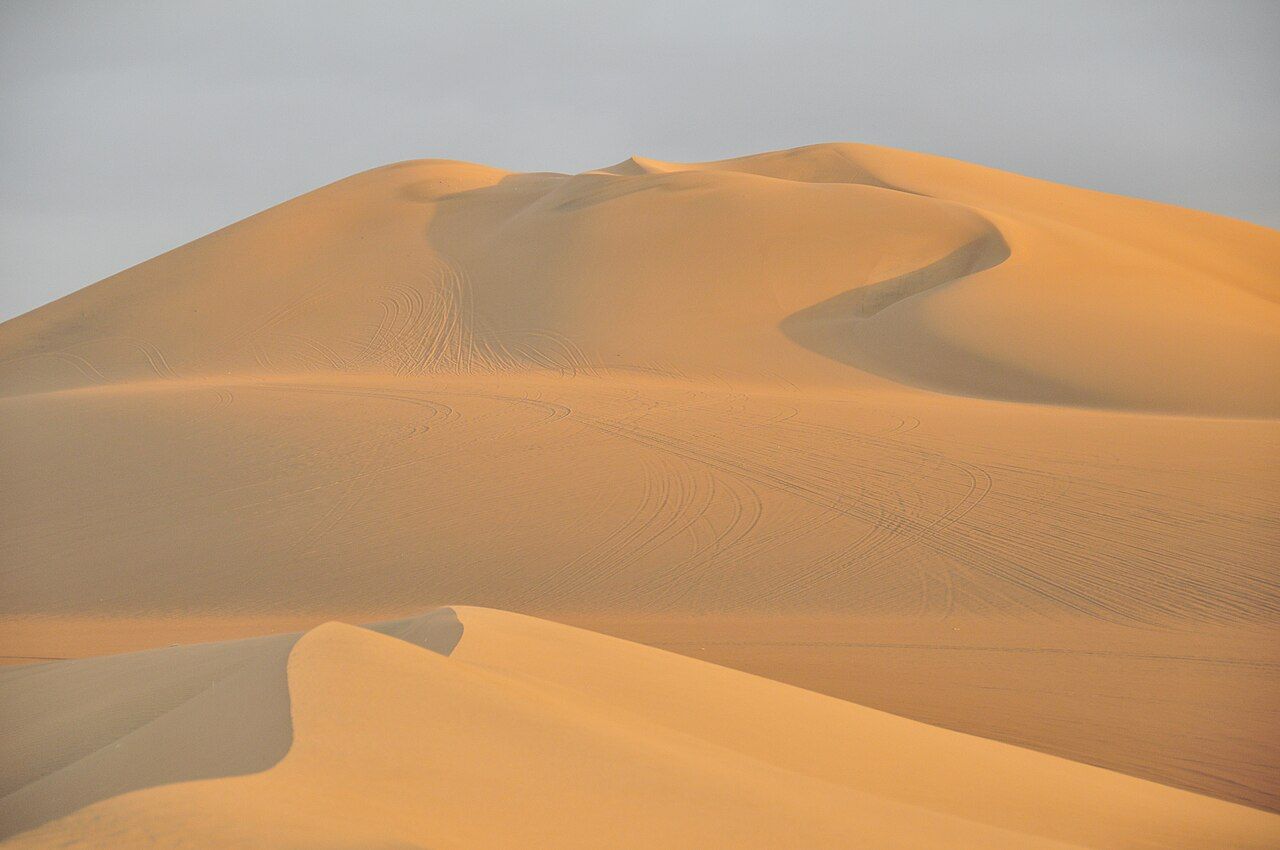 Camera: nwhitford | Creative Commons BY 2.0

The sand gets very hot in the middle of the day and can burn bare feet. Wear closed shoes, cover your arms, and protect your eyes, because sand flies everywhere once the wind gets up. Wrap your phone in a bag; fine grains get into everything.
Sunset on the dunes
The light at the end of the day is the high point of a visit. Most buggy trips time their return to catch it, and dozens of people line up on the crest above the village as the sun goes down. You do not need to pay to join them. Climbing on foot is slow and tiring in the soft sand, but it takes perhaps half an hour to reach a good viewpoint, and the reward is the whole oasis spread below you as the dunes turn from gold to pink to grey.
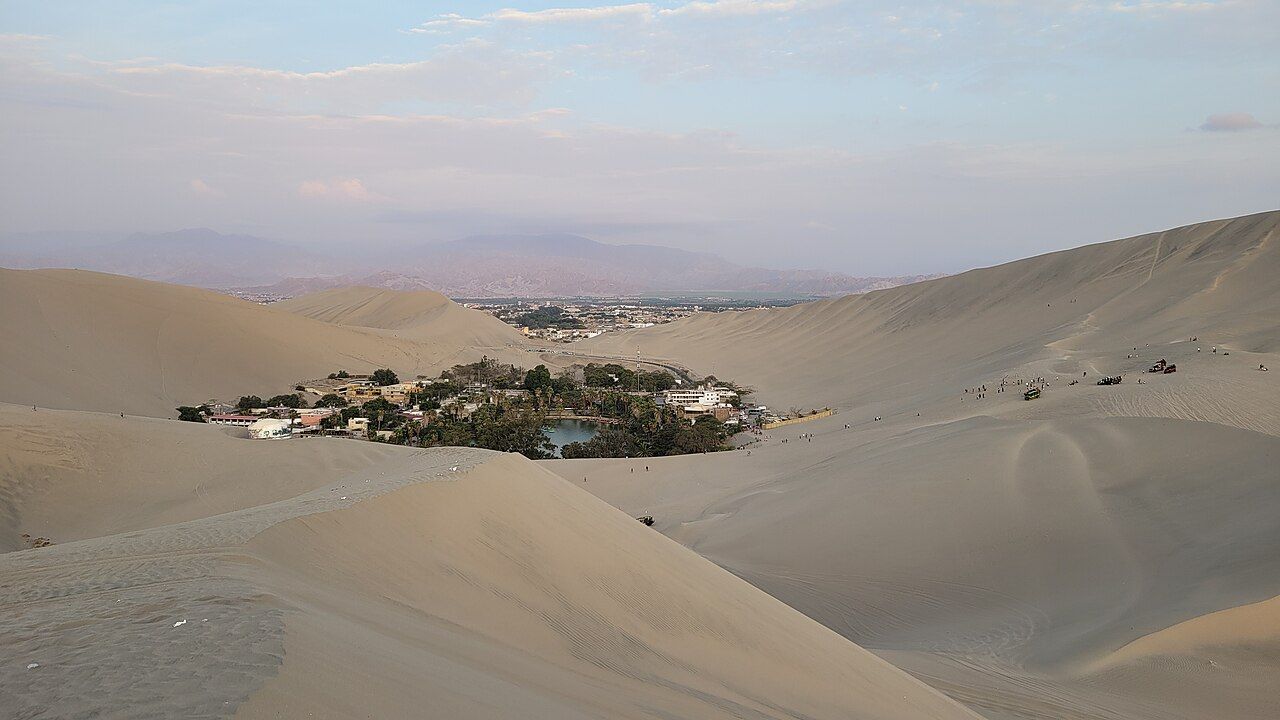 Camera: Mojnsen | Creative Commons BY-SA 4.0

Come down before it gets fully dark, while you can still see the path back.
Ica, wine and pisco
The valley around Ica is the heart of Peru's grape country, and the region has many bodegas, wineries and pisco distilleries, from family workshops to large estates. Many offer tastings, and some of the small ones still crush grapes the old way at harvest time in the early months of the year. A short taxi ride takes you to several. Drink sensibly; the guide to pisco and chicha has some notes on how strong a pisco sour really is.
Ica also has a regional museum with collections from the cultures of the southern coast, a good counterpoint to the dunes if you have a spare morning.
Costs and timing
Huacachina is cheap by most standards, but it is busier and pricier than Ica itself. Buggy and board trips vary a lot in price, so compare a few before you choose. There is usually a small charge to enter the dune area. Eating in Ica is cheaper than at the lagoon.
The weather is dry all year, warmer and sunnier than Lima. Summer days from December to March can be very hot in the middle of the day, so put the physical bits in the morning or late afternoon. In winter, while the garúa keeps the capital grey, Ica is often clear and pleasantly warm, which makes it a good escape from the cloud.