
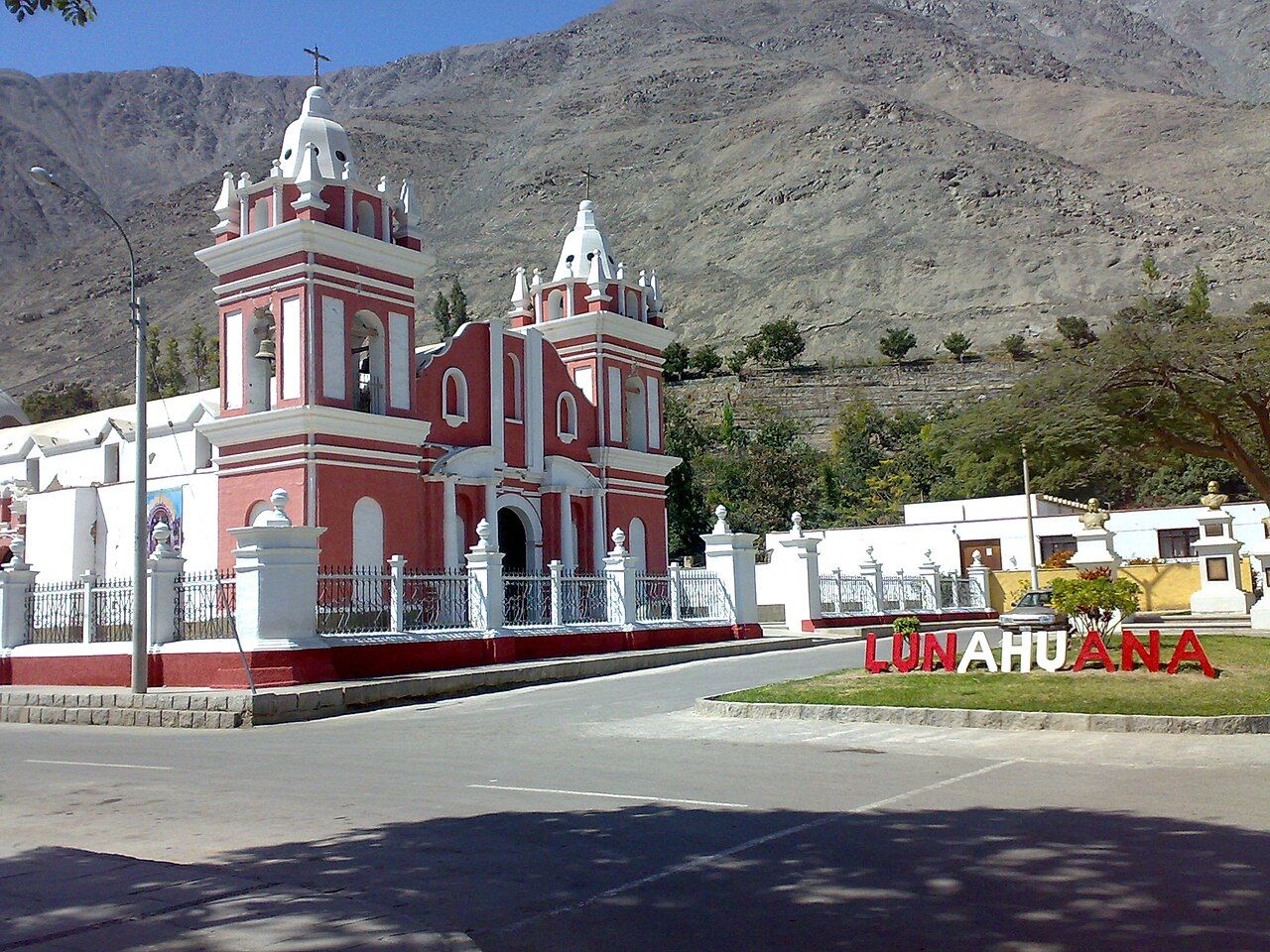
 Camera: aOliNex | Creative Commons BY-SA 2.0
Leave the coast at San Vicente de Cañete and drive inland, and within half an hour the grey of the shore falls away. The road climbs slowly beside the Cañete river into a narrow valley of vineyards, orchards and stone walls, hemmed in by bare brown mountains. Lunahuaná is the small town at its heart, and on sunny weekends it fills with families from Lima who come to raft, eat and drink a glass of local wine.
It is not a place of grand sights. The appeal is the change of air: sun, a fast river, fruit trees and the slower pace of a farming town. That makes it a good escape for a weekend away from the city.
The town and the square
The centre of Lunahuaná is a neat main square shaded by trees, with benches, flower beds and a church with twin bell towers painted in red and white. Around it are shops selling local wine and pisco, fruit preserves and sweets, plus simple places for lunch. It is the kind of square where people sit and talk in the late afternoon, and it is worth doing the same.
The town makes a good base for wandering the valley. Small settlements, vineyards and viewpoints sit along the road on both sides of the river, connected by bridges, including a swaying suspension footbridge that people cross for fun. Hire a bicycle or a moto-taxi, the three-wheeled motorbike taxis common in small towns, to get between them.
Rafting on the Cañete
The river is the main draw for many visitors. Rafting trips run on stretches around the town, with rapids that suit beginners when the water is low and become much livelier when it is high. The season is shaped by the rains in the Andes: from roughly December to April the river runs fuller and faster, which is when rafting is most exciting. The rest of the year it is calmer and better for first-timers.
Rafting with care
- Choose a trip that provides a helmet and a properly fitted life jacket, and gives a safety briefing before you get in.
- Listen to the guide's instructions about what to do if you fall in. Feet first, toes up, and float.
- Do not go if you cannot swim at all, or if you have been drinking.
- Ask how high the river is that day. After heavy rain upstream, a gentle run can become a serious one.
Other outdoor options in the valley change with the season and can include zip lines, cycling routes and short walks into the hills. Ask in town what is running when you arrive.
Next: Huacachina's dune oasis
Vineyards, pisco and river shrimp
The Cañete valley is part of Peru's wine and pisco country, and small bodegas line the road through Lunahuaná. Many are family businesses where you can taste wine, the young, slightly sweet local wine some producers make, and pisco distilled from grapes grown on the spot. Harvest time, early in the year, is when the valley is at its busiest and the bodegas are at their liveliest. If you want to know more about the national spirit before you go, read the notes on pisco and chicha morada.
The other local speciality is river shrimp, camarones, caught in the Cañete and served in many forms, from a thick spicy soup called chupe de camarones to simple fried shrimp. It is the dish people come for. Fruit from the valley, such as grapes, apples and pecans, is sold in the square and along the road.
Getting there on a budget
Lunahuaná is roughly 180 kilometres south of Lima. Take a bus down the Panamericana Sur to Cañete, two to three hours depending on traffic. Many southbound buses stop there, and you can ask for San Vicente de Cañete specifically. From the town, minibuses and shared cars run up the valley to Lunahuaná in under an hour. The whole trip is cheap, but slow; leave early.
Some people visit as a day trip, but you spend most of it on the road. A night or two makes more sense and lets you enjoy the valley in the evening. Weekdays are quieter and cheaper; long weekends and public holidays are busy. If you are working out how to leave Lima by bus, the guide to heading south explains the terminals and the Panamericana.
Prices for rafting, bike hire and food are modest, but they rise when the town is full. Ask what a rafting trip includes and how long you actually spend on the water.
Sun above the fog
Lunahuaná sits inland and a little above the coast, which means it usually escapes the winter cloud of the garúa that hangs over Lima from roughly May to November. On a grey Lima weekend in July, it can be warm and sunny here. That alone draws many city dwellers. In summer, the valley is hot during the day, with cool evenings.
Bring sunscreen and a hat, since the mountain sun is strong. A light jacket helps in the evenings. After heavy rains in the Andes, landslides can occasionally block roads in the valleys around Lima, so in the wet months it is worth checking road conditions before you set out.
A slower weekend
The best way to enjoy Lunahuaná is not to rush. Raft in the morning, eat shrimp at lunch, take a bike along the river in the afternoon and finish in the square with a glass of local wine. You will head back to the city calmer and sunburnt, which is exactly why Limeños keep coming here.