
 Camera: Pierre André Leclercq | Creative Commons BY-SA 4.0
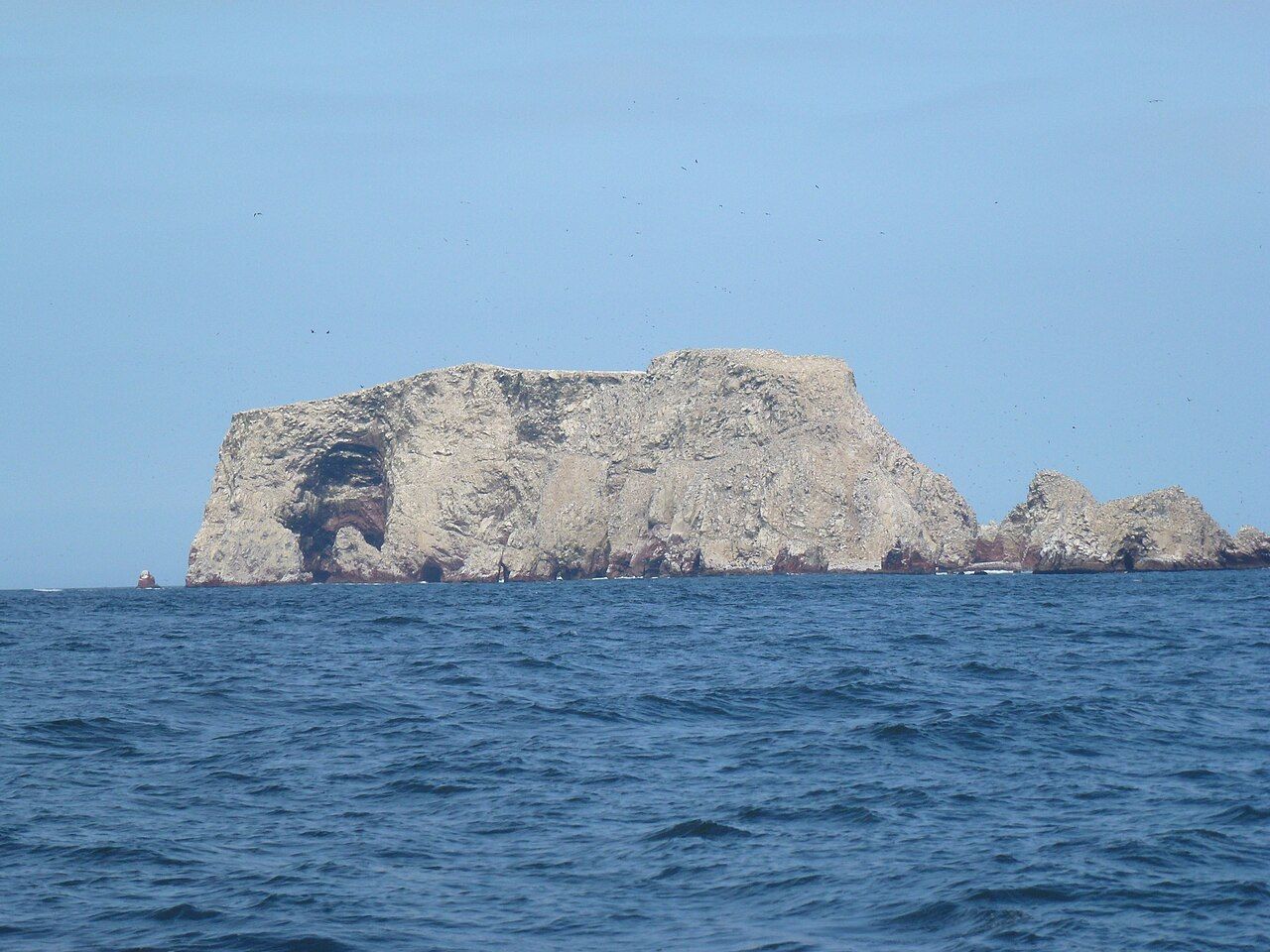
Head south from Lima for a few hours and the coast turns into pure desert: tawny hills, wind-ribbed sand and a cold, deep-blue sea. At the edge of all that dryness, the town of Paracas faces a sheltered bay, and just offshore lie the Ballestas Islands, a cluster of bare rock that hosts some of the richest wildlife on the Peruvian coast.
The reason is the ocean. The cold Humboldt Current runs north along this shore and brings nutrients up from the deep, and with them huge shoals of anchovy. Where the fish are, the birds and sea lions follow. The result is a scene that feels closer to a nature documentary than to a weekend away from the capital.
The boat to the Ballestas Islands
Boats leave from the pier in Paracas in the morning and spend roughly two hours on the water. They do not land. The islands are protected, and visitors watch from the boat as it noses along the cliffs and through the rock arches. That is the right way to do it, and you still get remarkably close.
Expect sea lions in large numbers, hauled out on the ledges and barking over the engine noise. Humboldt penguins stand in small groups on the lower rocks, looking slightly out of place in the sunshine. The air above is full of birds: Peruvian boobies, guanay cormorants and pelicans, rising and settling in dense clouds. In the right season you may see sea lion pups on the beaches at the base of the cliffs.
The white crust on the rocks is guano, the droppings of all those birds. It was once so valuable as fertiliser that it shaped the economy of the whole country in the nineteenth century, and it is still harvested here at intervals under strict control. You will smell it before you see it.
You will smell it before you see it.
On board
- Sit on the side facing the islands on the way out; boats usually circle so both sides get a turn.
- Wear a hat that will not blow off, and a light layer, because the spray is cold.
- If you get seasick, take something before you board, not once you are bobbing beside the cliffs.
Boats can be cancelled when the sea is rough, sometimes at short notice. If the trip is the main reason you are going, leave a spare morning in your plan.
The Candelabra on the hillside
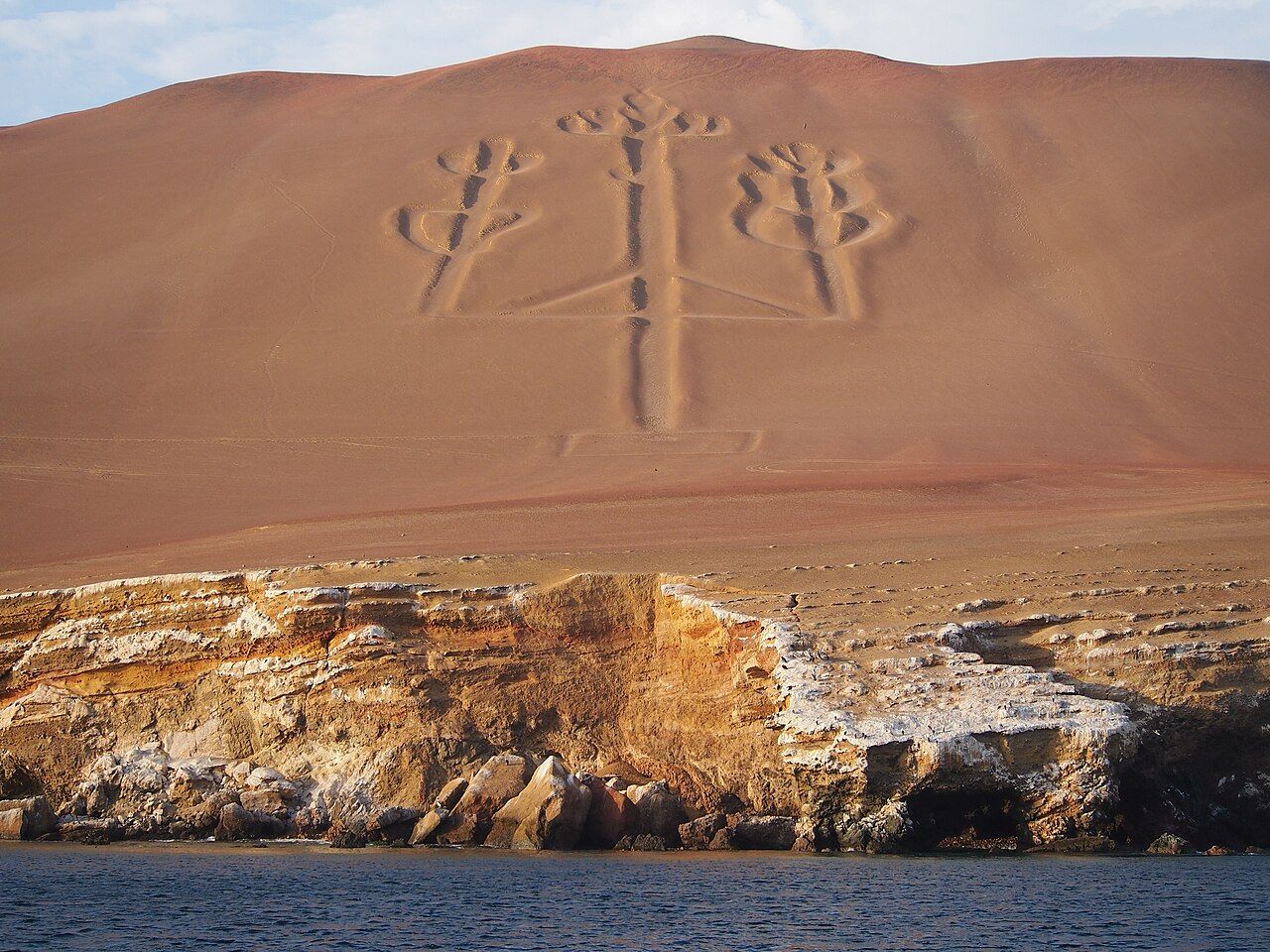
On the way to the islands, the boats pause off the tip of the peninsula to look at the Candelabra, a huge figure cut into the slope of a sandy hill facing the sea. It looks like a three-branched candlestick or a stylised plant, and it is large enough to see from far out on the water.
 Camera: Alex Zanuccoli | Creative Commons BY-SA 2.0

No one knows for certain who made it or why. Some link it to the ancient Paracas people, some to later cultures, and others to sailors who may have used it as a landmark. It is often compared with the Nazca lines further south, though it was made differently and sits on a slope rather than a plain. The dry, still air in the hollow where it lies has kept it sharp. Enjoy it from the boat; walking on the hillside is not allowed.
The national reserve
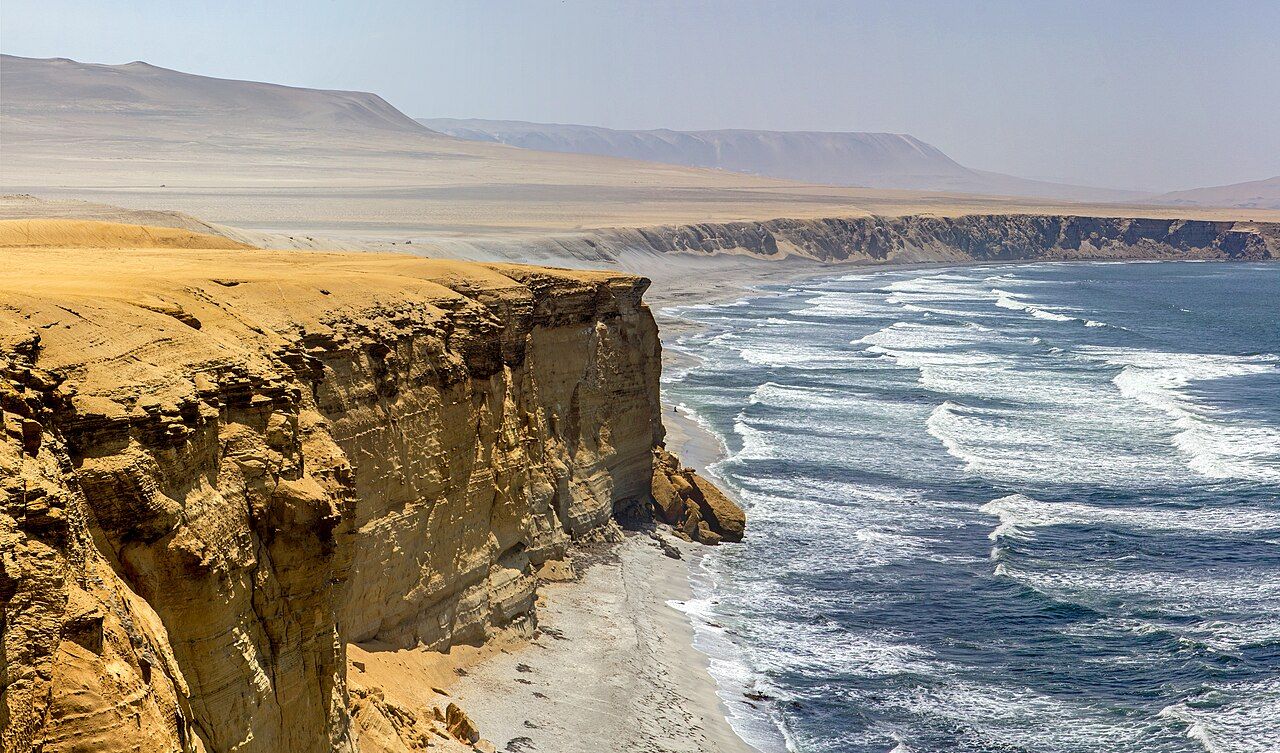
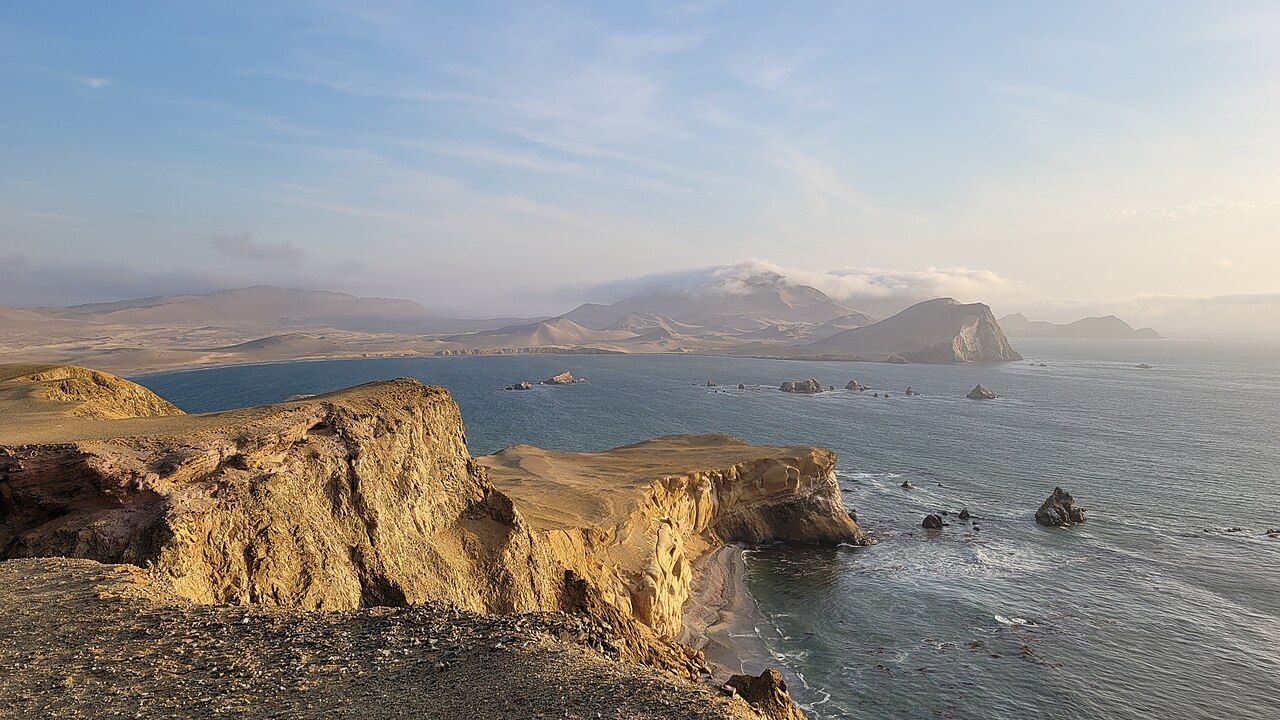
The Paracas National Reserve covers the peninsula south of town and a large stretch of sea. It protects one of the most striking desert coasts in South America: sandstone cliffs in shades of yellow, ochre and red, dropping straight into the surf, with empty beaches below and sand plains running inland.
 Camera: masT3rOD | Creative Commons BY 2.0

Most visitors see it on a short tour by minibus in the afternoon, which stops at viewpoints over the cliffs, a beach of reddish sand and a small fishing cove where you can eat fresh fish. You can also hire a bicycle in town and ride part of the way, though the distances are long, there is no shade and the afternoon wind can be strong. If you cycle, start early and carry plenty of water.
Next: Huacachina's dune oasis
The bay itself is part of the reserve. In some months flamingos feed in the shallows, and a range of shorebirds work the mudflats. Bring binoculars if you have them, and keep a respectful distance from any birds resting on the beaches, since disturbance costs them energy they need for feeding. The visitor centre near the entrance explains the marine life and the ancient Paracas culture, famous for its finely woven textiles found in burials on the peninsula.
 Camera: Mojnsen | Creative Commons BY-SA 4.0

Making it work from Lima
Paracas is around 250 kilometres south of Lima, a journey of three to four hours by bus along the Panamericana Sur, longer when traffic is heavy leaving the city. Long-distance buses go either to Paracas itself or to the nearby town of Pisco, from where a short taxi or local transport covers the last stretch. Comparing a few bus options at the terminals or online is the simplest way to find a fair price.
A day trip is possible but tiring, because the boats leave early and the bus ride is long both ways. Most people stay at least one night and spend the next morning on the water. Paracas also sits on the road to the dunes, so many travellers continue to the oasis at Huacachina near Ica, about an hour and a half further south. If you plan to keep going toward Arequipa or the Andes after that, the guide to heading onward covers the long buses and flights.
Costs
Paracas is more expensive than Lima's budget districts because almost everything is aimed at visitors. The boat trip and reserve tour carry their own fees, and food on the seafront costs more than in a city market. Treat it as a mid-range splurge, compare a few offers in town, and remember the reserve entry and pier charges are sometimes separate from the boat price.
Weather and wind
Paracas is drier and sunnier than Lima for much of the year. The grey season fog that blankets the capital in winter is often thinner here. Summer, from December to April, brings hot, clear days. The constant feature is the afternoon wind, strong enough at times to lift sand into the air and to stop boats. Plan anything on the water for the morning, keep the afternoon for the reserve or the bus, and pack a jacket even when the forecast looks warm. Sunglasses help too, because the glare off pale sand and water is fierce at midday.