
 Camera: JulioKuLu | Creative Commons BY-SA 4.0
Lima was founded by the Spanish in 1535 as the City of the Kings, and for nearly three centuries it was the capital of a vast colonial empire in South America. The old centre, known locally as the Cercado or simply el Centro, still shows that history in its grand squares, ornate churches and rows of wooden balconies. UNESCO lists it as a World Heritage site, and it is one of the most rewarding places in the country for a long walk.
It can also be hectic. Traffic is heavy, the pavements are crowded, and some streets have seen better days. Come by daylight, keep your belongings close, and you will find a centre that is far richer than its first impression suggests.
The Plaza Mayor
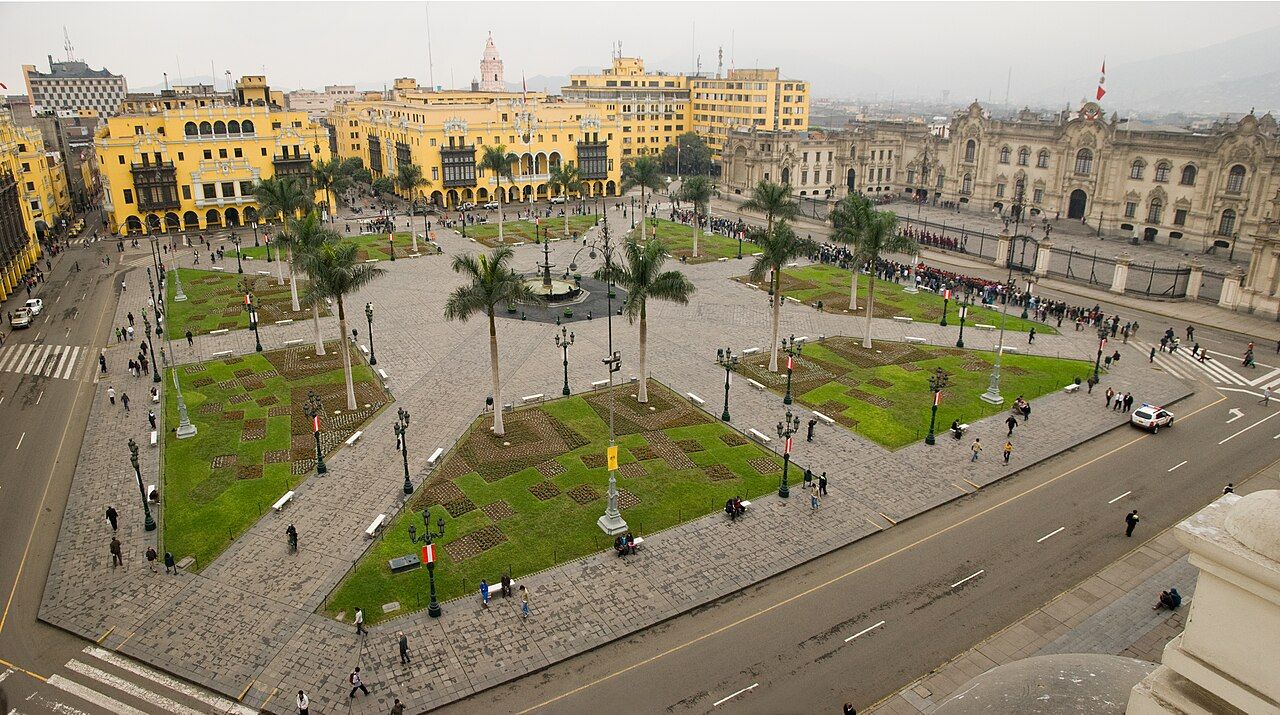
Everything in colonial Lima started at the Plaza Mayor, also called the Plaza de Armas. The square is wide and open, with lawns, palms, lamp posts and a bronze fountain in the middle that is one of the oldest structures in the city. Around it stand the main institutions of power: the cathedral, the Archbishop's Palace, the Government Palace and the municipal building.
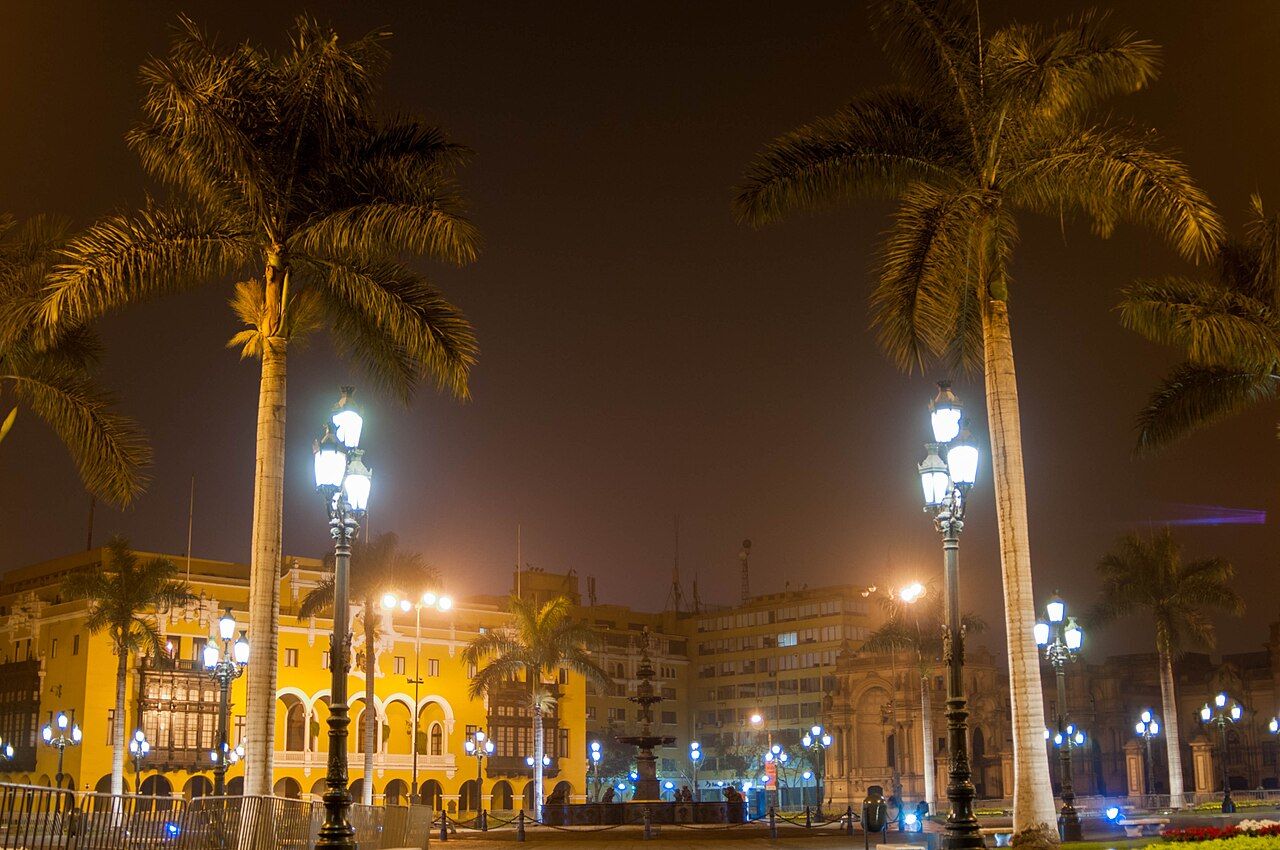
Many of the buildings around the square are painted a strong yellow, with arcades at street level and dark carved balconies above. The Archbishop's Palace has one of the most elaborate balconies in the city, a long, enclosed wooden gallery that runs along its facade. At night the square is lit up and the fountain glows, but daytime is the best time to explore.
 Camera: Jonathan M. Corredor O | Creative Commons BY-SA 4.0

Every day around midday, the guard at the Government Palace changes in a ceremony with a military band, marching soldiers and plenty of brass. It is a lively spectacle, and you can watch from the railings in front of the palace. Arrive a little early to get a good spot.
The cathedral and the churches
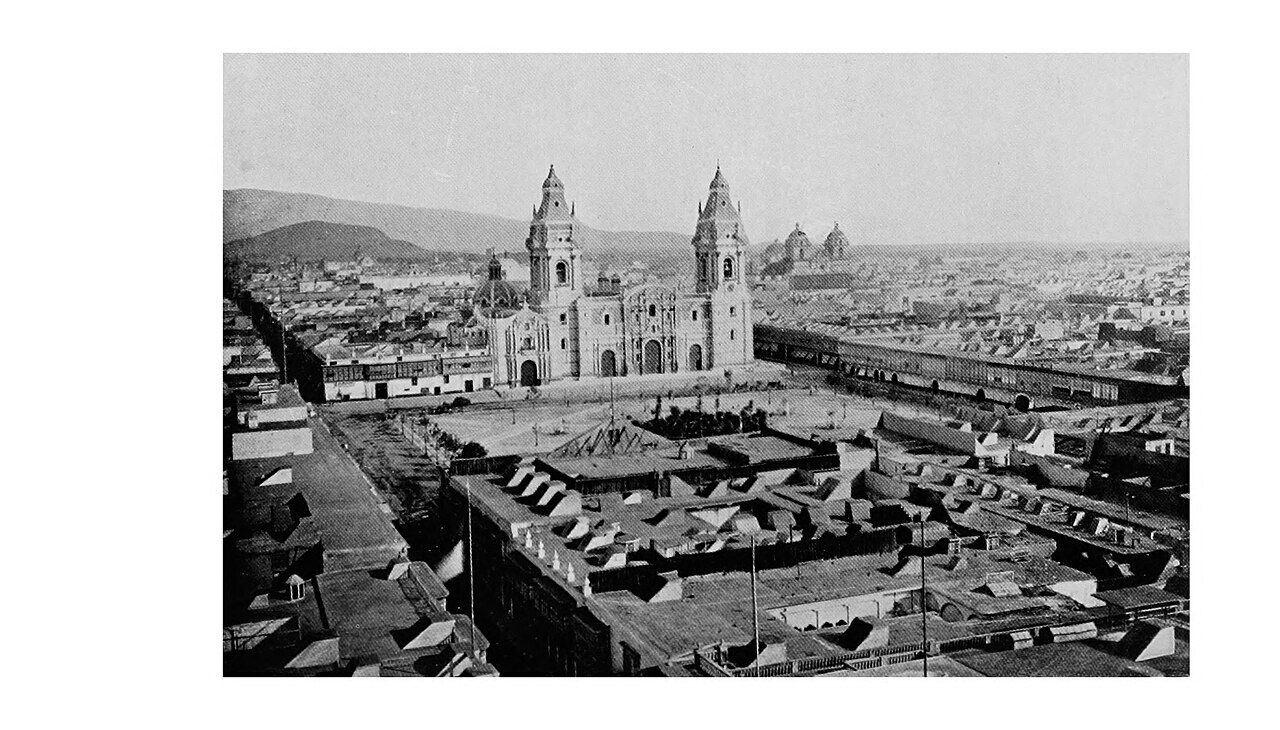
The cathedral of Lima dominates one side of the square, with twin towers and a carved stone facade. It has been damaged and rebuilt several times after earthquakes, which is why its style is a mix of periods. Inside are side chapels, carved choir stalls, religious paintings and the tomb of Francisco Pizarro, the conquistador who founded the city.
 Camera: Enock, C. Reginald (Charles Reginald), 1868-1970 | public domain

The centre is full of churches and monasteries, often within a few blocks of each other. Look for Santo Domingo, with its tiled cloisters, and the church of La Merced on Jiron de la Union, with its heavily carved facade. Many churches let you in for free during services, while their museums and cloisters charge a modest entry fee. Hours vary, and some close at lunchtime.
If you go inside during a service, keep your voice low and your camera away. Out of respect, avoid wandering around while people are praying.
Look out, too, for the processions that fill these streets on religious holidays. The biggest takes place in October, when the image of the Lord of Miracles, the Senor de los Milagros, is carried through the centre by devotees dressed in purple. Crowds are huge and traffic stops, so it is a remarkable sight but a slow day for sightseeing. Street stalls sell turron, a sticky layered sweet made for the season, and it is worth a taste.
Balconies and the old streets
Lima's wooden balconies are among its best-known features. Many date from the colonial and early republican periods, when they let families look onto the street without being seen. They come in two main styles: open balconies with railings, and enclosed ones with lattice screens, a design with Moorish roots brought from Spain.
The best way to see them is to walk the streets around the Plaza Mayor, especially Jiron Ucayali, Jiron Lampa, Jiron Junin and the blocks behind the cathedral. Look up as you walk, and take your time: some balconies are beautifully restored and painted, while others are worn and leaning but still hold their shape. The city has run a programme in which balconies can be adopted and restored, and the results show along some streets.
Next: Pueblo Libre, gold, clay and a quiet square
For a lively walk, follow Jiron de la Union, the pedestrian street that runs from the Plaza Mayor towards Plaza San Martin. It is busy with shoppers, street performers and vendors, and lined with grand old buildings, some of which now house shops. Plaza San Martin, at the other end, is a large square with a monument to the liberator Jose de San Martin and handsome early twentieth-century buildings around it.
San Francisco and its catacombs
A few blocks from the Plaza Mayor, the Monastery of San Francisco is one of the most popular sights in the centre. The church has a striking yellow facade, and the monastery around it has cloisters lined with old Seville tiles, a library of antique books and a collection of colonial paintings.
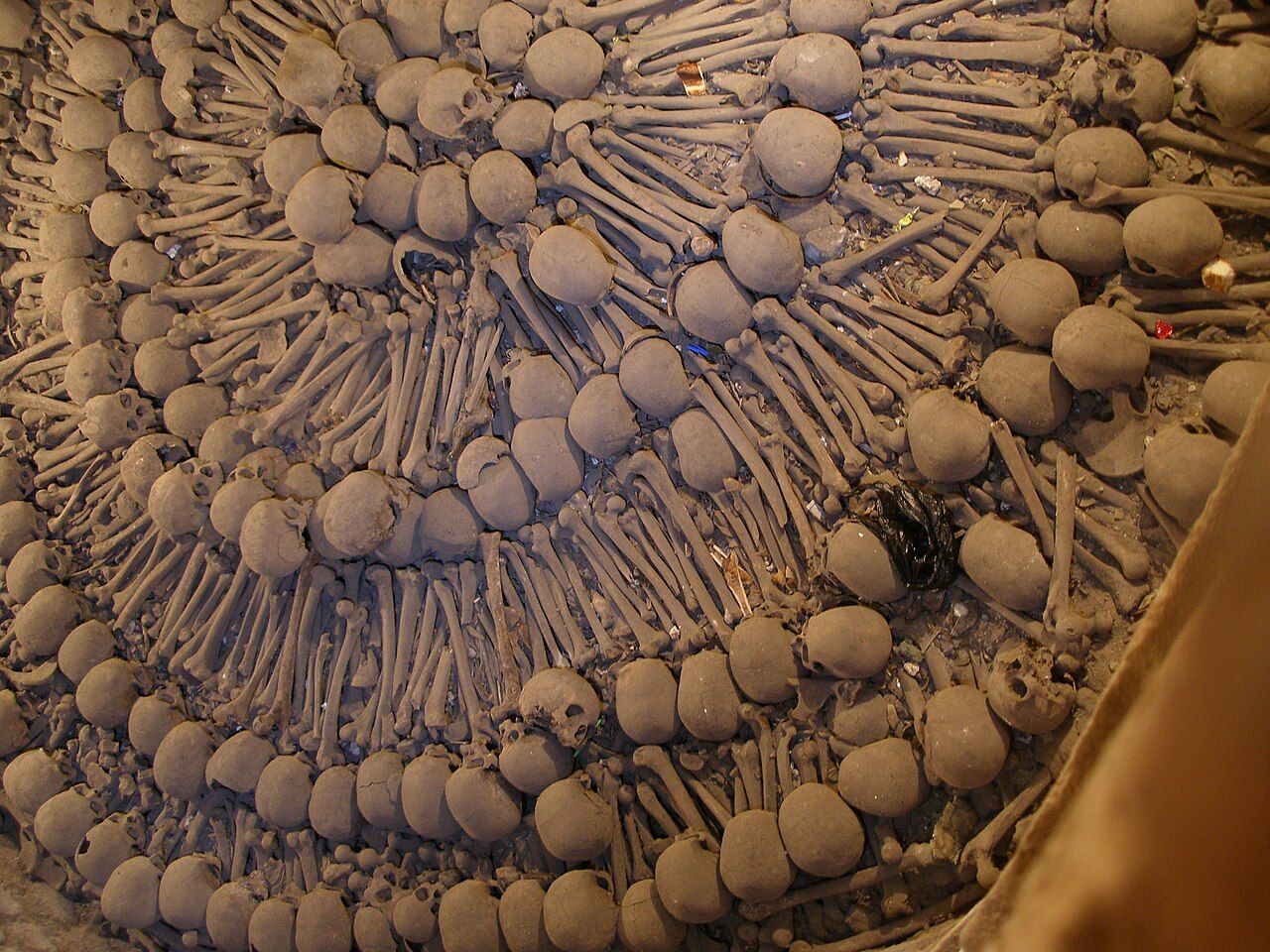
The highlight for most visitors is underground. Beneath the church lie the catacombs, which served as the city's cemetery during the colonial period. Thousands of people were buried here, and their bones have been sorted and arranged in pits, with skulls and thigh bones laid in circles and patterns.
 Camera: quinet | Creative Commons BY 2.0

Visits are by guided tour only, in Spanish or English, and they include the library and cloisters. Groups leave regularly, but lines can build at weekends. The passages are low, narrow and dim, so the catacombs may not suit anyone who dislikes tight spaces. Photography is not allowed in parts of the monastery, so follow the guide's lead.
Thousands of people were buried here, and their bones have been sorted and arranged in pits, with skulls and thigh bones laid in circles and patterns.
Getting there and staying sensible
The Metropolitano bus line runs from Miraflores and Barranco to the centre in well under an hour, with stops near Jiron de la Union and Plaza San Martin. Taxis are easy to find, though traffic can slow them down. Read getting around Lima for how the bus card and fares work.
The centre is busiest and most comfortable during the day. Keep your phone and wallet in a front pocket or a zipped bag, avoid displaying expensive jewellery, and watch your belongings in crowds. Stick to the main streets around the plazas and Jiron de la Union, and plan to head back to Miraflores or Barranco before dark. For more on keeping your wits about you, read staying safe in Lima.
For lunch, the streets around the centre are full of places serving set menus at very low prices. You can also walk a few blocks east to the Barrio Chino, around the Mercado Central, to try chifa, Lima's Chinese-Peruvian food. Bring cash, eat where the locals queue, and give yourself a full day for the centre: there is far more here than one morning can hold.