
 Camera: Manuel González Olaechea | Creative Commons BY 3.0
Ask anyone in Lima what to eat, and they will probably say ceviche. The dish of raw fish cured in lime juice, with chilli, red onion and salt, is the city's pride, eaten everywhere from street stalls to smart restaurants and celebrated with a national day of its own. It is simple, fresh and sharp, and it is one of the best things you can eat in Peru.
It is also a dish with rules. Limenos eat it at lunch, never at dinner. They argue about the right fish, the right chilli, the right lime and how long to leave the fish in the marinade. Learning a little about it makes eating it more fun.
What ceviche is
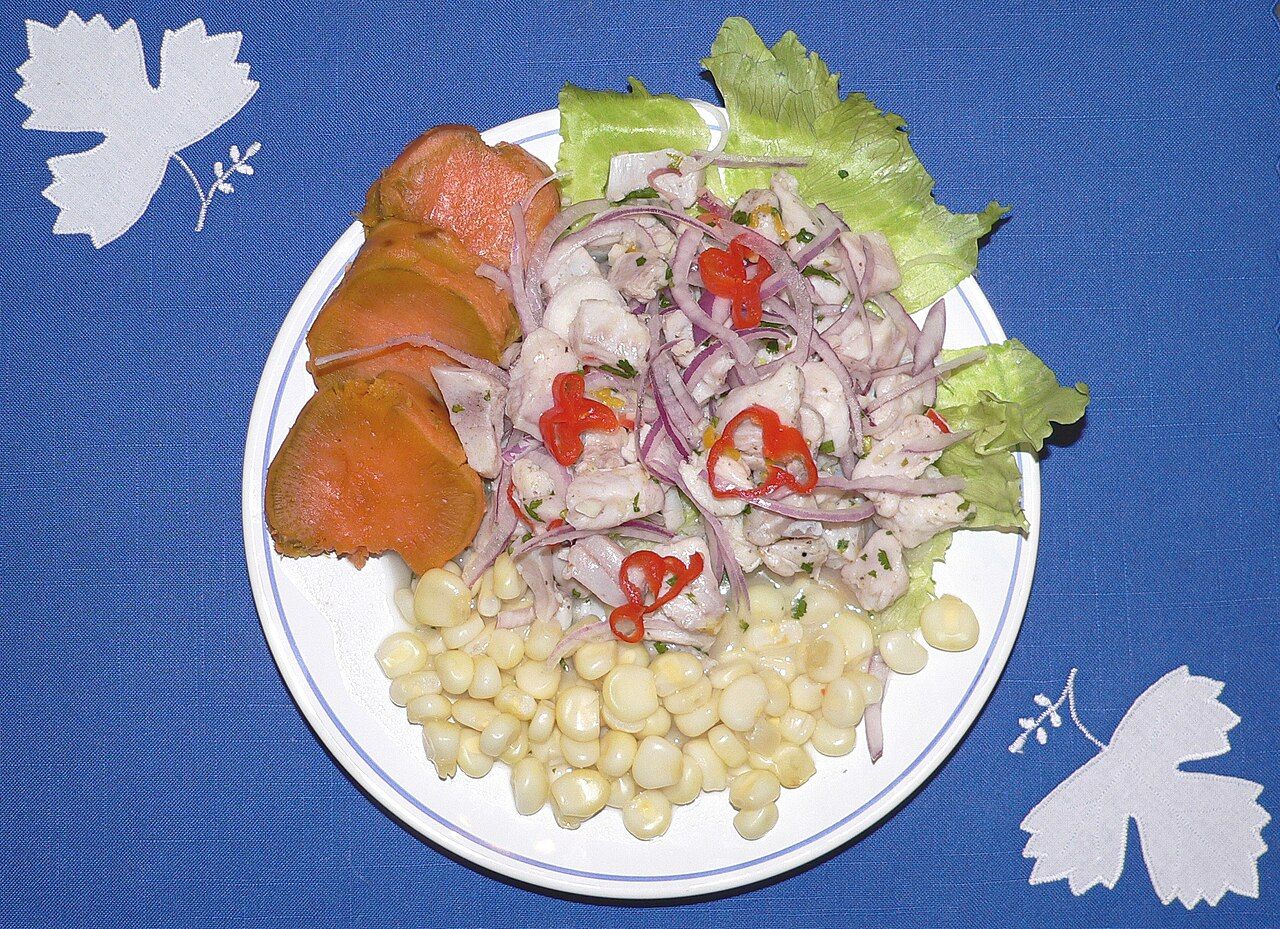
At its simplest, ceviche is cubes of raw white fish mixed with the juice of small, sour Peruvian limes, a little salt, sliced red onion and fresh chilli, usually aji limo, a small, hot pepper. The lime juice changes the texture of the fish, turning it firm and white on the outside while it stays tender inside.
Modern Lima ceviche is mixed and served almost at once, so the fish is only lightly cured. Older recipes left it to marinate for hours, and you may still find that style in some places. Either way, the result is cool, tangy and spicy, with a clean taste of the sea.
Ceviche is usually served with slices of boiled sweet potato, camote, which balances the acidity, and with corn: either choclo, large white kernels of boiled Andean corn, or cancha, toasted corn kernels that crunch like nuts. A lettuce leaf may be added for colour.
Why ceviche is eaten at lunch
In Lima, ceviche is a lunchtime dish. The reason is practical: the fish arrives fresh from the morning catch, and a good cook wants to serve it within hours. By evening, it is no longer at its best. Many cebicherias, the restaurants that specialise in ceviche, open in late morning and close by around four or five in the afternoon.
There is also a cultural side. Ceviche is a light, refreshing dish suited to warm days, and lunch is the main meal of the day in Peru. Families and friends meet over long lunches at weekends, ordering ceviche to share before moving on to hot dishes.
By evening, it is no longer at its best.
If you see ceviche on a dinner menu in a tourist area, it may be fine, but locals would raise an eyebrow. Follow their lead and plan your ceviche for lunchtime.
Weekends are when the ritual shows best. On Saturdays and Sundays, whole families settle in around midday, order a round of cold drinks and a couple of big platters to share, and stay until the plates are wiped clean. Arrive by half past twelve if you want a table at a popular place without a long wait. Weekdays are quicker and calmer, with office workers eating fast before heading back to their desks, and some places add a cheap ceviche starter to their set lunch.
Leche de tigre
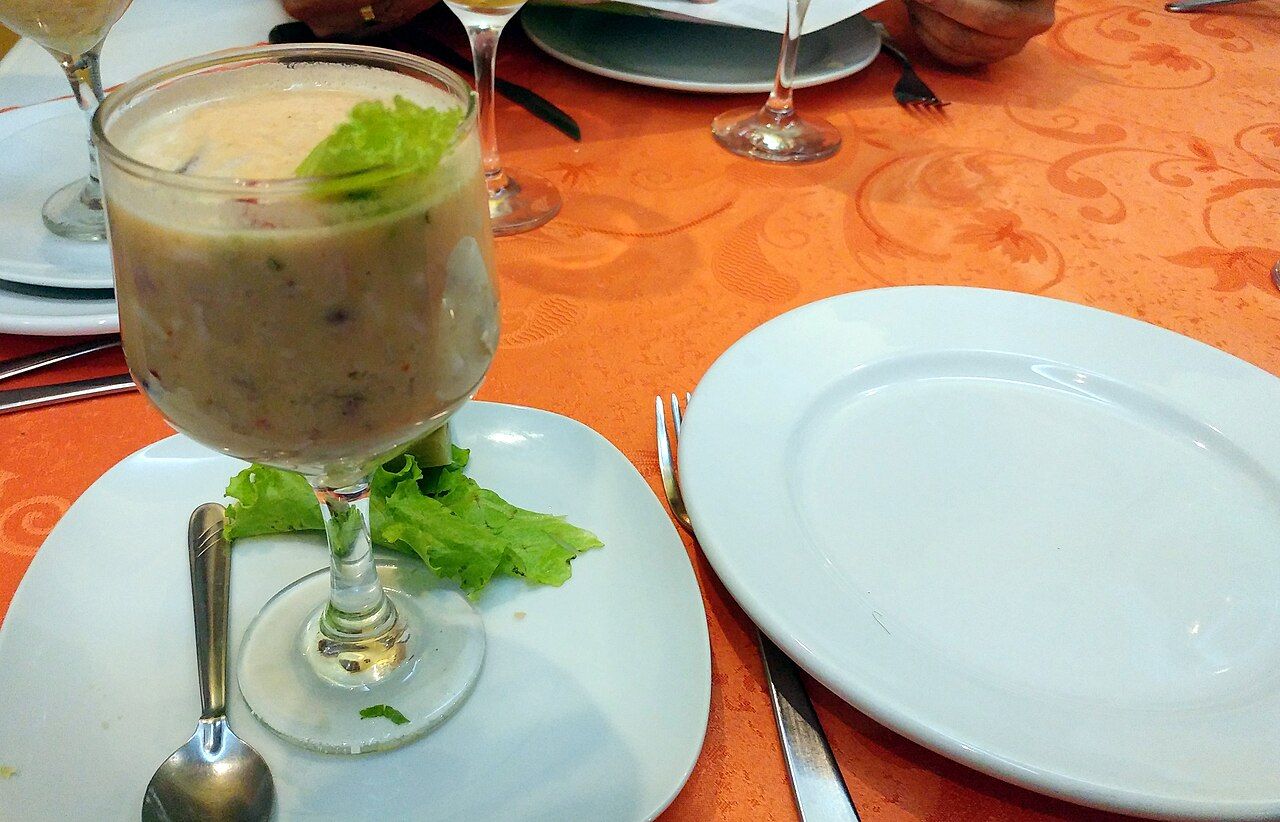
When the ceviche is finished, there is a pool of milky, tangy juice left on the plate. This is leche de tigre, tiger's milk: lime juice mixed with the juices of the fish, chilli, onion and sometimes a little fish stock or blended fish. It is sharp, salty and spicy, and Limenos drink it straight.
 Camera: Cmasi | Creative Commons BY-SA 4.0

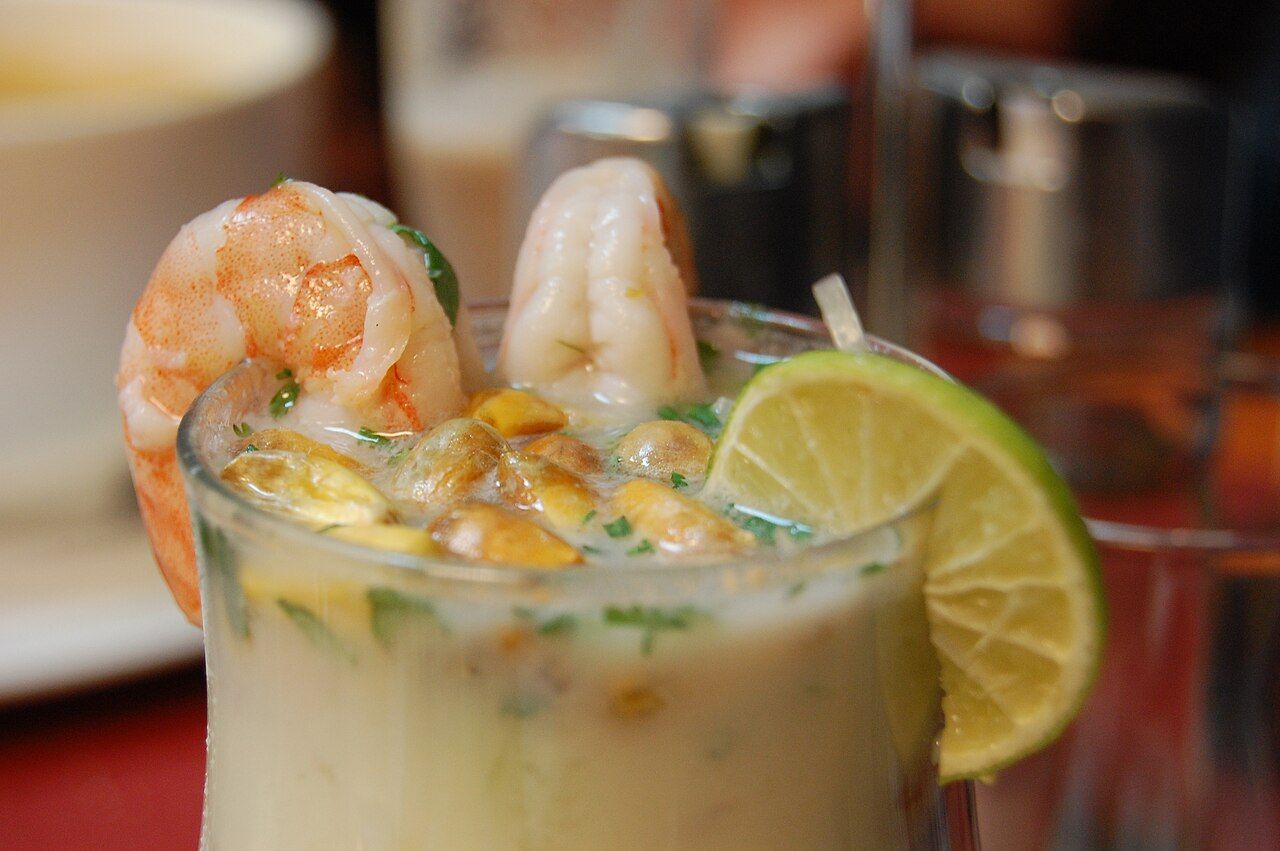
Leche de tigre is also served on its own, in a glass, often with a few pieces of fish or seafood and some cancha on top. It has a reputation as a hangover cure and a pick-me-up, and some people claim it has other powers too. Whether or not you believe them, it is a bracing way to start a meal.
Next: The menu, Lima's everyday feast
 Camera: Carlos Varela | Creative Commons BY 2.0

Tiradito and other raw fish dishes
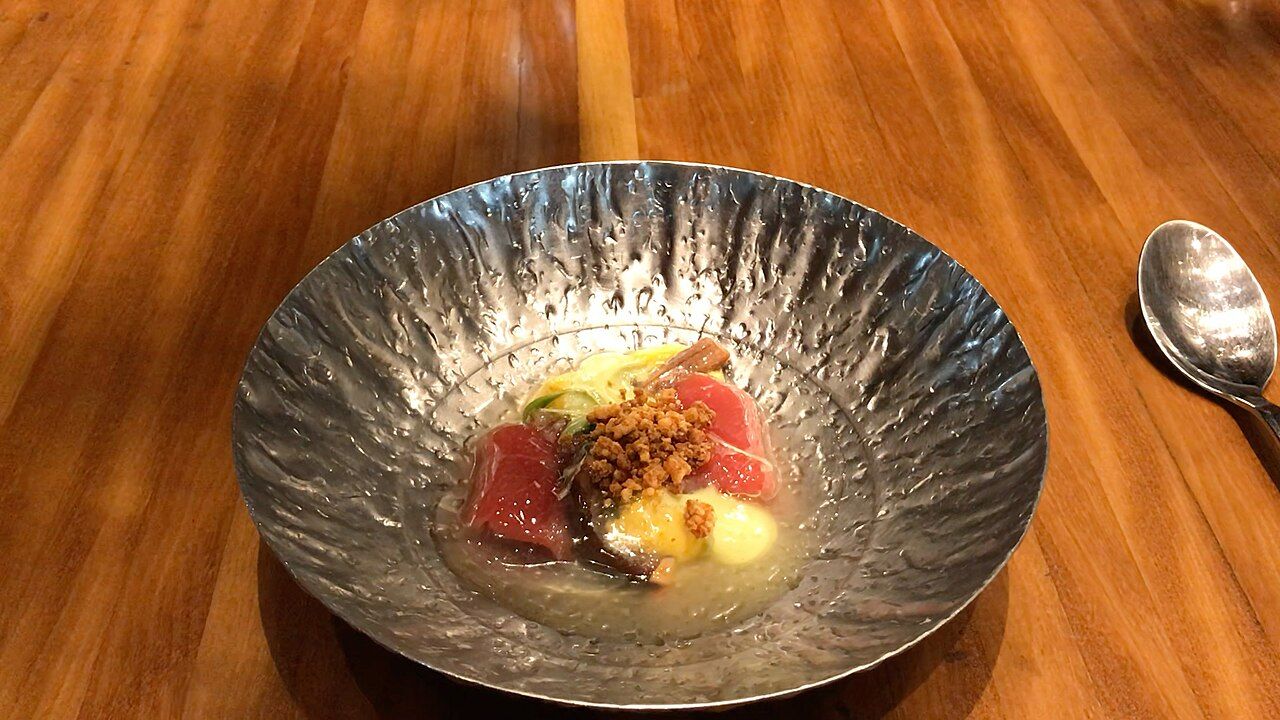
Ceviche has relatives. The best known is tiradito, thin slices of raw fish, cut like sashimi, served without onion and dressed with a sauce of lime and chilli, often aji amarillo, a yellow chilli with a fruity flavour. Tiradito shows the influence of Japanese immigrants on Peruvian cooking, a style called Nikkei.
 Camera: WMrapids | CC0 1.0 Universal

Other dishes to look for at a cebicheria include:
- Ceviche mixto: fish mixed with seafood such as squid, octopus, prawns and shellfish.
- Chicharron de pescado: crispy fried chunks of fish, often served with onion relish.
- Jalea: a big platter of fried mixed seafood, good for sharing.
- Arroz con mariscos: rice cooked with seafood, a Peruvian cousin of paella.
- Causa: layers of mashed yellow potato with a seafood filling.
Many cebicherias serve a combination plate, with ceviche, chicharron and rice on one platter. Ordering this way lets you taste several dishes in one sitting.
How to order at a cebicheria
Cebicherias range from simple stalls in markets to smart restaurants with white tablecloths. On a budget, the best value is at market stalls and small neighbourhood places, especially near the coast in Chorrillos, Surquillo or the centre. Prices vary widely, from very cheap to fairly expensive, so look at the menu before you sit down.
When you order, you may be asked how spicy you want it. Say "sin picante" for no chilli, "poco picante" for a little, or "con picante" if you can take the heat. Some places bring cancha and a dish of chilli sauce to the table while you wait. Drink a cold beer or a glass of chicha morada, the purple corn drink, with your ceviche.
Many people start with a ceviche and then move on to a hot dish, such as fried fish or rice with seafood. Portions can be large, so share if you are with others.
Eating raw fish safely
Ceviche is made with raw fish, so freshness and hygiene matter. Eat it at lunchtime, at busy places where the fish turns over quickly. Look for clean kitchens, fresh-smelling fish and cooks who keep the fish cold. Avoid ceviche that has been sitting out, and steer clear of places that look empty at lunchtime.
If you have a sensitive stomach, start with a small portion, or try cooked dishes first. Pregnant women and people with weak immune systems should check with a doctor before eating raw fish.
The best places to eat ceviche are where locals go. Ask for recommendations, look for queues and follow your nose. A morning at the Surquillo market, followed by ceviche at a market stall, is one of the best ways to spend a day in Lima. After that, try the daily set lunch in the guide to the menu del dia, or head to Chorrillos for seafood by the sea.