
 Camera: Feralbt | Creative Commons BY-SA 3.0
In Lima, lunch is the main meal of the day, and the menu is how most working people eat it. The menu, short for menu del dia, is a set lunch with a starter or soup, a main course and a drink, served for a fixed price at small neighbourhood restaurants across the city. It is cheap, filling and often delicious, and it gives you a taste of everyday Peruvian cooking.
On a budget, the menu is your best friend. Eat a good one at lunch and you will need little more than a snack for dinner.
How the menu works
Look for a board or a sheet of paper outside a small restaurant, usually written by hand, listing the day's options. There are typically two or three starters and three or four mains to choose from, plus a drink. Some places add a small dessert.
Starters often include a soup, such as a chicken broth or a hearty vegetable soup, or a small dish such as a salad, a stuffed potato or a portion of ceviche. Mains are usually a meat or chicken dish with rice and potatoes or beans. The drink is often chicha morada, the purple corn drink, or a fruit juice called refresco.
Menus are served from around midday until the food runs out, often by mid-afternoon. Prices are low, though they vary by neighbourhood: they are lowest in working districts and around markets and higher in Miraflores and other areas popular with visitors.
Lomo saltado
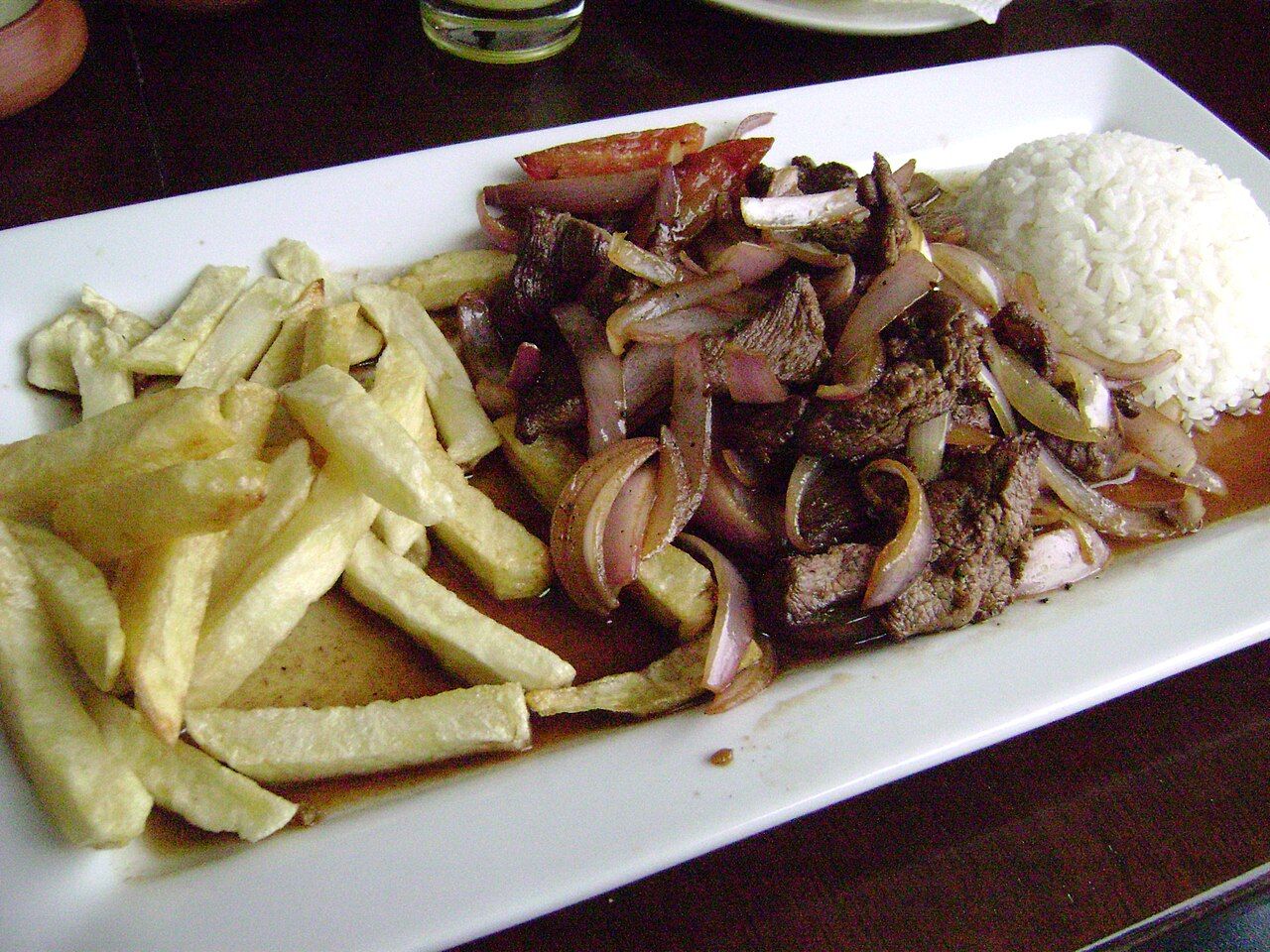
Lomo saltado is one of the most popular dishes in Peru and a favourite on lunch menus. Strips of beef are stir-fried at high heat in a wok with red onion, tomato, garlic, soy sauce and vinegar, then tossed with fried potatoes and served with white rice.
 Camera: Dtarazona | Creative Commons BY-SA 4.0

The dish shows the influence of Chinese cooks, who brought the wok and soy sauce to Peru in the nineteenth century. It is a perfect example of how Peruvian cooking mixes ingredients and techniques from around the world. If you like it, try chifa, Lima's Chinese-Peruvian cooking, which shares many of the same flavours.
Next: Ceviche, a dish for the middle of the day
Aji de gallina
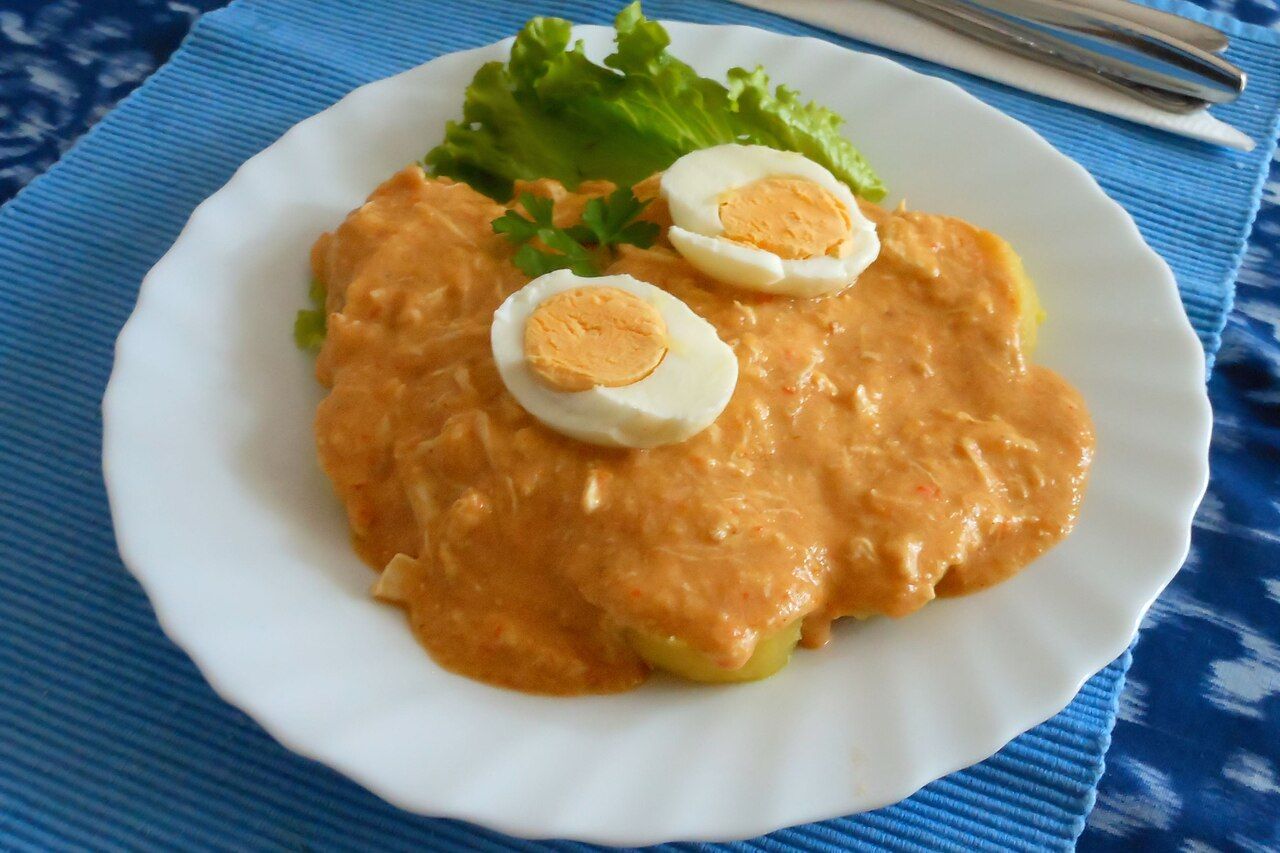
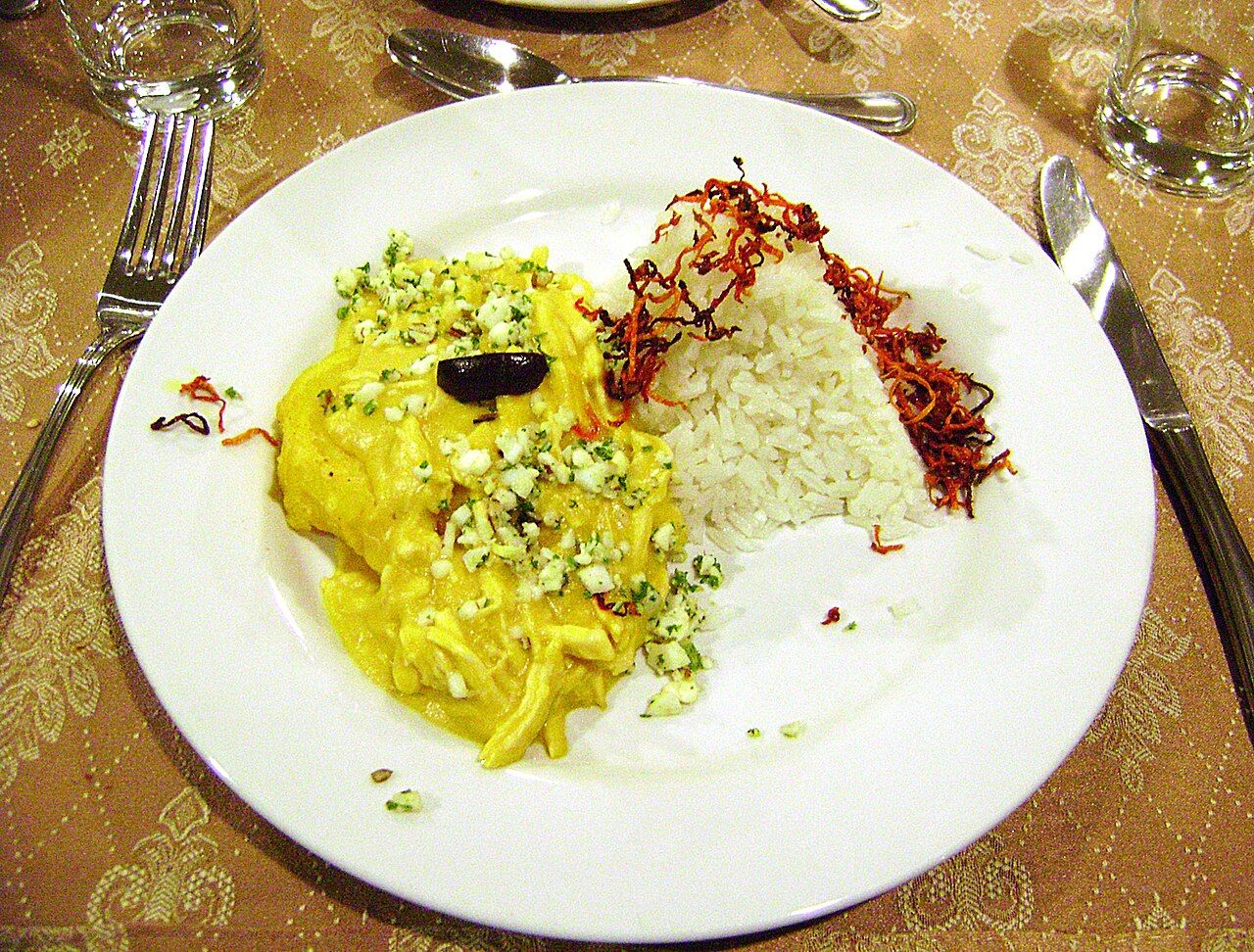
Aji de gallina is a comforting dish of shredded chicken in a creamy yellow sauce made with aji amarillo, the fruity yellow chilli, bread soaked in milk, onion, garlic, cheese and ground nuts. It is served over boiled potatoes with rice, a hard-boiled egg and a black olive.
The sauce is mild rather than hot, rich and slightly sweet, and it is a good choice if you are not used to spicy food. It is a classic of Lima home cooking and a regular on lunch menus.
Causa and other favourites
Causa limena is a cold dish of mashed yellow potato seasoned with lime and aji amarillo, layered or rolled with a filling of tuna, chicken or seafood mixed with mayonnaise, avocado and egg. It is a popular starter on menus, colourful and refreshing.
Other dishes you may see include:
- Arroz con pollo: chicken with rice cooked in a green sauce of coriander.
- Seco de res: beef stewed in a sauce of coriander, served with beans and rice.
- Tallarines verdes: spaghetti in a green sauce of basil and spinach, often with a steak.
- Papa a la huancaina: boiled potatoes in a creamy, mildly spicy cheese sauce.
- Tacu tacu: fried rice and beans, often topped with a steak or a fried egg.
 Camera: Dtarazona | public domain

Chinese and Japanese influences
Peruvian cooking has been shaped by many cultures, and two of the most important are Chinese and Japanese. Chinese immigrants arrived in Peru from the mid-nineteenth century, and their cooking gave rise to chifa, the Chinese-Peruvian style that includes dishes like arroz chaufa, fried rice. Chifa dishes often appear on lunch menus alongside Peruvian classics.
Japanese immigrants arrived later, from the end of the nineteenth century, and their influence is seen in Nikkei cooking, which combines Japanese techniques with Peruvian ingredients. Tiradito, the sashimi-like cousin of ceviche, is a good example. Nikkei restaurants tend to be pricier than menu places, but you will find Nikkei touches on many menus.
Ordering a menu
Walk in, sit down, and say you would like the menu. The waiter will tell you the options, or point to the board. Choose a starter and a main, and the drink comes with it. Pay at the end, usually in cash.
Some useful phrases:
- "Un menu, por favor": one menu, please.
- "Que hay de entrada?": what are the starters?
- "Que hay de segundo?": what are the mains?
- "La cuenta, por favor": the bill, please.
The guide to Spanish for Lima has more. Tips are not expected at menu places, but leaving the coins from your change is appreciated.
Finding a good menu
The best menus are found away from the tourist areas, in working neighbourhoods and around markets. Look for places full of office workers and locals at lunchtime. Clean kitchens, a short list of dishes and food that comes out hot are good signs.
The Surquillo market and the streets around it, the historic centre and the side streets of Miraflores and Barranco all have good options. Eat early, as popular places run out of the best dishes by the middle of the afternoon. On Sundays many menu places close, so plan a market lunch or a chifa instead.